1-805-484-2992
Quotes - Engineering - SalesHYDRONIC AND PROCESS
Boiler
Isolation
Three reasons usually apply together: the boiler manufacturer requires treated water and the distribution system cannot guarantee it; the building static head exceeds what the boiler will accept; or the distribution loop runs glycol and the boiler should not.
A plate exchanger handles all three and costs less than the consequences of any one of them.
This is the duty where a lazy approach figure costs the most, and it costs it invisibly.
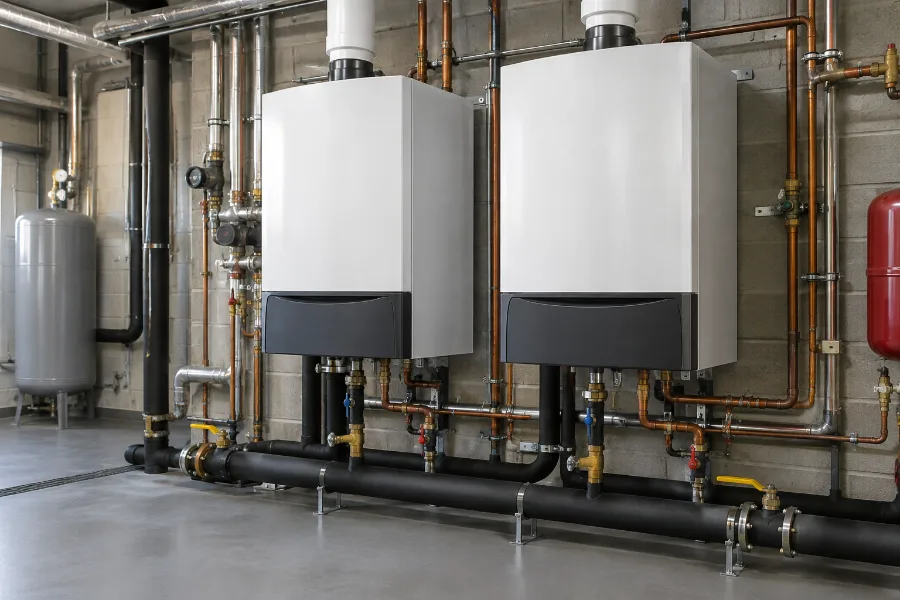
Approach Costs Boiler Efficiency Directly
In Practice
- Approach Costs Boiler Efficiency Directly
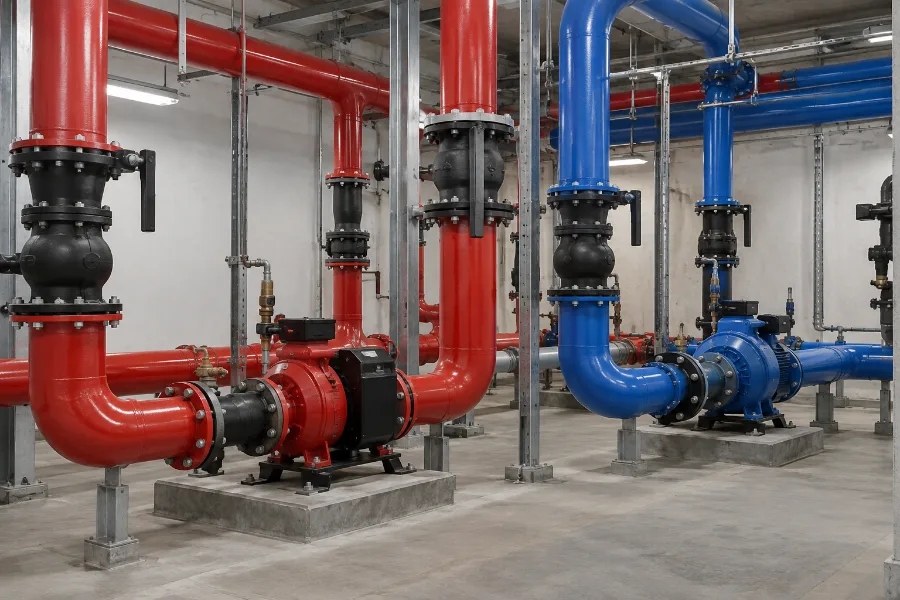
On a Condensing Boiler That is Decisive
In Practice
- On a Condensing Boiler That is Decisive
The approach temperature is a boiler efficiency specification in disguise
A condensing boiler condenses when its return water is below the flue gas dew point - roughly 55 C on natural gas. A system designed to return 50 C to the boiler will condense happily. Put an exchanger with 8 C of approach in the way and the boiler sees 58 C, and it stops condensing.
Nothing breaks. The boiler runs, the building is warm, and the efficiency the specification promised is simply absent. It shows up on a gas bill rather than an alarm.
Size this exchanger on the return temperature the boiler needs, not on the heating duty. Plate count is cheap against a decade of non-condensing operation.
- If domestic hot water is generated downstream - , potable separation rules may apply to this exchanger too.
Sizing This Duty
For a boiler isolation quote we need the boiler-side and system-side flows, supply and return temperatures on each loop, wether either loop carries glycol, and any code stamp the job calls for. The reply names the frame, plate count and pressure class.
Request a boiler isolation quoteOn Site: Boiler Isolation
Check the piping direction first. A plate exchanger reaches a close approach only when the two streams run counter-current. Piped co-current - both fluids entering at the same end - the same unit cannot bring the boiler return down toward the building return, however many plates it has.
It is an easy mistake on a B25T or B120T because all four connections sit on one face and nothing looks wrong. The symptom is a boiler return that tracks well above the building return at every load. Swapping the two connections on one side corrects it without touching the unit.
They do not have to be equal, but the ratio decides which end of the exchanger gets the close approach. With equal flows the temperture difference is even along the plate. With less flow on the boiler side than the building side, the boiler water gives up more temperature and returns colder, which helps condensing but makes it harder to reach the building supply setpoint.
The opposite imbalance is the one to avoid: an oversized boiler pump sends water through too fast to cool and the return comes back hot. Give us both pump flows as they will actually run, not just the heat load.
Only if the boiler is seeing the return temperature it needs. A like-for-like replacement reproduces the old approach exactly, including a poor one. If the plant has since had a condensing boiler fitted, the original selection was probably made for a boiler that did not care.
Send the nameplate and the return temperature the boiler wants. Often the answer is the same frame with a higher plate count: the port positions stay where the pipework already is and only the pack depth and weight grow. If the frame is at its plate ceiling the duty moves up a frame, and then the connections need checking.
Rate it for the building side, because that is where the static head lands. The exchanger is there so the boiler does not carry that pressure, which means the exchanger does. Add the pump head and the relief setting to the static figure and give us the total as a design pressure.
Most hydronic work sits in the S class, published as 31 bar at 155 C. That letter is a category, not the stamped rating of a particular build, so we confirm the rating of the unit quoted against your design pressure. The pressure classes page sets out the other letters.
A strainer on the building-side inlet, sized to the particle limit of the frame, and isolation valves with flushing connections so the unit can be cleaned in place. Old loops carry rust sludge and scale fragments, and the first weeks after a new exchanger goes in are when most of it moves.
Fouling here does not announce itself as a heating complaint. It shows as the boiler return temperature creeping up over a season while the building stays warm, because the approach is widening. Log that temperature at commissioning so there is a baseline to compare against.
Frames for This Duty