
1-805-484-2992
Quotes - Engineering - SalesREFRIGERANT DUTY
Evaporators
If the liquid and vapor do not split evenly at the inlet, some channels flood and some run dry. The starved channels superheat early and stop transferring useful heat; the flooded ones return liquid to the compressor.
The distribution device at the refrigerant inlet is what prevents this, and it is the whole difference between an evaporator and a single-phase frame with identical plates.
Every other evaporator problem can be corrected. This one cannot.
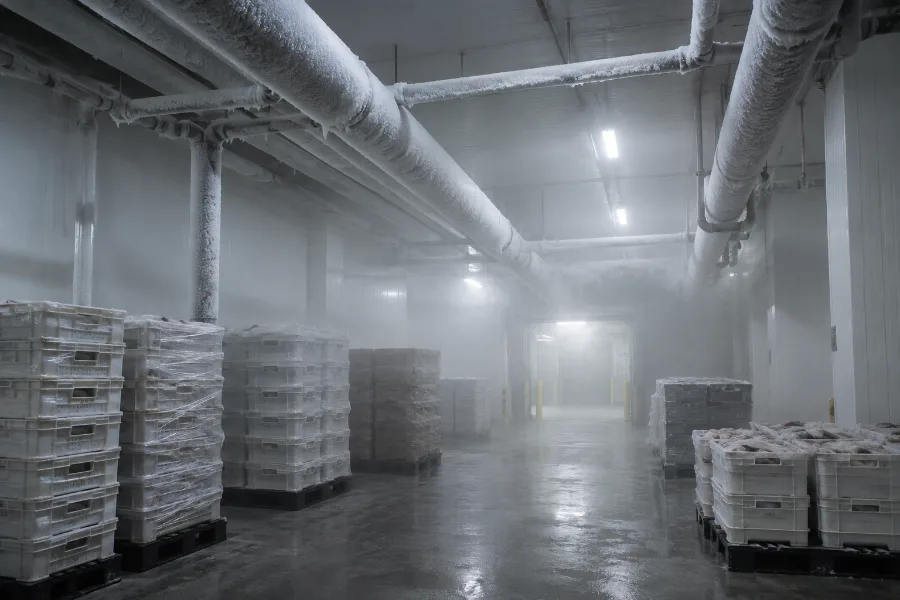
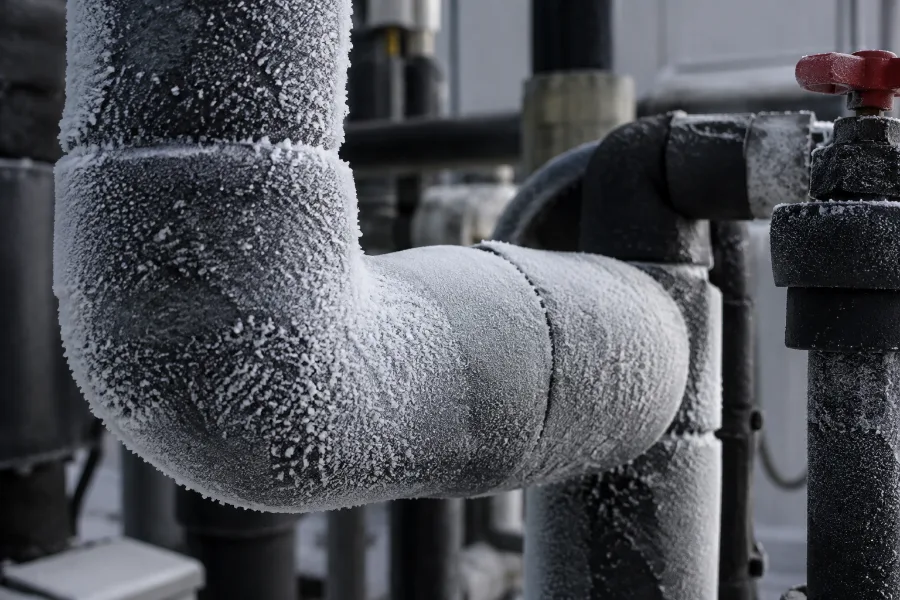
Freezing is the failure mode that ends the conversation
Water expands when it freezes and a brazed plate pack has nowhere to put that expansion. The plates split, the circuits mix, and the unit is scrap. There is no repair and no partial recovery.
The guidance is specific and worth following literally: a filter below 1 mm, 16 mesh; antifreeze wherever the evaporating temperature approaches the water-side freezing point; and a freeze protection thermostat together with a flow switch to guarantee constant water flow.
Loss of flow at low evaporating temperature is what actually causes the failure, which is why the flow switch matters more than the thermostat. A thermostat sees the problem; a flow switch sees the cause.
- AsyMatrix frames - where refrigerant charge has to be minimized - up to 30 percent lower hold-up volume than a symmetric equivalent.
Sizing This Duty
Send the refrigerant, the cooling capacity, the evaporating temperature and the superheat, then the liquid being chilled - by name, with its flow, temperatures in and out, and glycol concentration if any. Back comes the frame, plates and pressure class, quoted.
Request a evaporators quotePractical Questions on Evaporators
Close to the inlet, on a short straight run. Refrigerant leaves the valve as a mixture of liquid and vapor, and every elbow or long horizontal run between the valve and the unit gives the two phases a chance to separate. Once they arrive separated, the distribution device has nothing uniform to distribute.
The sign is superheat that hunts and will not settle, with an uneven temperature pattern across the pack.
No. More plates raise the evaporating temperature and help efficiency, but they also lower the refrigerant velocity in each channel. When the velocity is too low the vapor no longer carries the oil up and out of the unit, the oil collects in the channels, and capacity drifts down while the compressor runs short of oil.
The check is at minimum load, not design load. On a variable-capacity compressor or a staged system, the lowest stage is where an oversized evaporator gets into trouble. Give the capacity range as well as the full-load duty, so the plate count is chosen to work at both ends.
Every field of the designation. The prefix letter identifies the series, and with it the inlet distribution arrangement, so a B-series frame with the same plate size is not a substitute for a V-, F- or P-series evaporator. A trailing T is a different plate generation. The pressure class has to suit the refrigerant - M, for example, is fatigue tested for refrigerants such as R410A, up to 45 bar at 135 C.
If the system has been or will be converted to another refrigerant, say so, because a like-for-like unit is right for the original refrigerant only. Refrigerant Compatibility covers what changes, and the Model Number Guide decodes the nameplate.
Against the refrigerant. Counter-current piping gives the closest approach, which lets the unit evaporate at the highest temperature for a given leaving water temperature.
A reversible machine cannot have it both ways. When the cycle reverses, the refrigerant direction through the exchanger reverses while the water keeps going the same way, so the unit is counter-current in one mode and co-current in the other. Pipe it counter-current for the mode with the larger load or the tighter temperature requirement, and have the selection checked in both - a unit sized only as an evaporator can come up short as a condenser.
When refrigerant charge is the constraint. AsyMatrix plates form channels of two different volumes, and the hold-up volume can be up to 30 percent lower than a symmetric equivalent. With a flammable refrigerant such as R290, where the permitted charge limits what a machine can be, that reduction can decide whether a design is allowed at all.
Note the naming: AS in a model name means AsyMatrix, not All-Stainless. An AS frame is not copper free on that account, so it is not by itself the answer to an ammonia or pure water duty.
Frames for This Duty

SERIES • 18 TO 75 GPM
SWEP B26
Asymmetric channels - two different channel volumes in one pack.
+ Learn More
SERIES • 200 TO 400 GPM
SWEP B250AS
AsyMatrix in the H pressure class - 45 bar at 155 C.
+ Learn More
SERIES • 75 TO 200 GPM
SWEP FI190
Part of the 190 range, designed around R32, R454B and R290.
+ Learn More