1-805-484-2992
Quotes - Engineering - SalesHYDRONIC AND PROCESS
Radiant Floor and Snow
Melt
A 50 percent glycol mix - common in snow melt - carries materially less heat than water and is considerably more viscous. Sizing on water figures and hoping is the most common error in this application.
Radiant floors also run at low supply temperature by design, which squeezes the temperature difference available across the exchanger. Less driving temperature means more surface for the same duty.
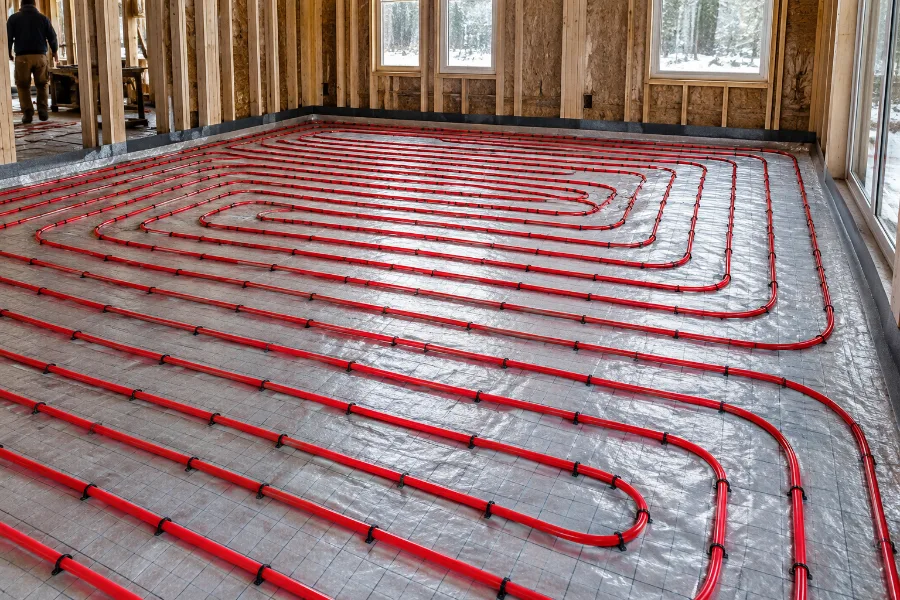
than the tonnage suggests - low supply temperature leaves little driving temperature difference.
Request a QuoteSnow melt systems are sized wrongly more often than almost any other hydronic duty, and the reason is that there are two loads and only one usually gets calculated.
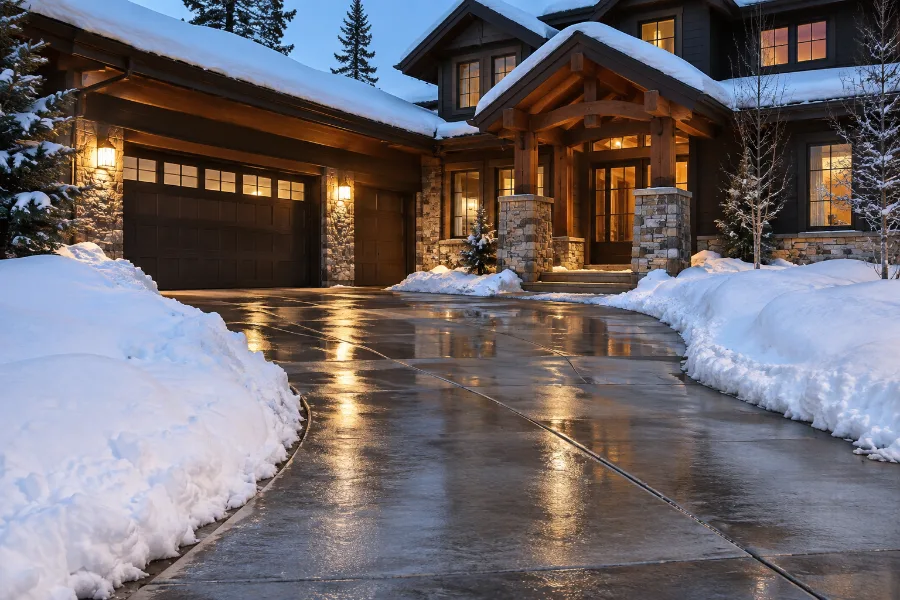
Idling load and recovery load are different numbers
The idling load is what keeps a warm slab warm. It is modest and it is what a steady-state calculation produces.
The recovery load is what brings a cold, snow-covered slab up to melting temperature within a useful time. It is several times larger, and it is the load the owner actually judges the system by - because it is the one that determines whether the driveway is clear before the morning.
Size the exchanger for recovery. A system sized for idling works perfectly in every condition except the one it was bought for.
- Slab thermal mass takes hours. - That is a control problem as much as a sizing one.
Sizing This Duty
Send the heat source supply temperature, the slab-side supply and return temperatures, both flows, and the glycol concentration in the floor or snow-melt loop. A quote follows naming the frame, the number of plates and the pressure class.
Request a radiant floor and snow melt quoteRadiant Floor and Snow Melt in Practice
Yes - on the boiler side. The glycol is protected. The water on the other side of the plate is not. At a cold start the slab loop returns fluid well below freezing, and if it circulates before the boiler loop is flowing, the still water in the boiler-side channels freezes in place and can split the unit.
It happens when the slab pump is started by a snow sensor and the boiler pump by a separate call for heat. Interlock them so boiler-side flow is proven first. A split unit shows up as glycol in the boiler loop or a slab loop that keeps losing pressure. See the freeze protection page.
Check it at the cold-start condition as well as at the design operating point. Glycol thickens sharply as it gets colder, and a 50 percent mix coming back from a frozen slab is far more viscous than the same fluid once the system is warm.
A selection made only at operating temperature can show an acceptable pressure drop and still leave the pump unable to establish flow on the first morning of a storm. Low flow then slows recovery further. Send the glycol type, the concentration and the lowest return temperature expected, and the fluid properties are applied at both conditions.
Not if slow clearing is the complaint. The same designation gives the same recovery. Send the nameplate together with the slab area, the glycol concentration and how quickly the owner expects the surface cleared.
Where the existing frame has room, a higher plate count on that frame is the simplest change: port positions stay put and the pack gets deeper. Confirm that the boiler and both pumps can carry the larger load before ordering, because an exchanger cannot transfer heat the boiler does not make.
It can, but it is rarely a good arrangement. The two loads want different things. Radiant floors run for long hours at low temperature and a modest, steady load. Snow melt is idle most of the season and then asks for a large load at once, on a stronger glycol mix.
A shared exchanger has to be sized for the snow melt recovery load, so it spends most of its life far oversized for the floors, at low velocity. It also puts the whole building on the snow melt glycol concentration. Separate exchangers let each be sized for its own duty and fluid.
Frames for This Duty