
1-805-484-2992
Quotes - Engineering - SalesREFRIGERANT DUTY
Suction Line
Exchangers
The liquid line gives up heat to the suction line. The liquid arrives at the expansion valve cooler, which reduces flash gas; the suction gas arrives at the compressor with assured superheat, which reduces the risk of liquid carry-over.
The constraint is pressure drop on the suction side. Suction gas is low density, and pressure lost there is compressor work spent for nothing.
More suction line heat exchange is not automatically better, and this is one of the few duties where oversizing actively hurts.
A balance, not a maximization
Subcooling the liquid is good. Superheating the suction gas is good up to a point, and past that point it raises the discharge temperature - which is the one thing the condenser side does not want, because discharge temperature is what tests the braze.
The pressure drop penalty pulls the same way. A larger frame with more surface also has more suction-side loss, and on a low-density gas that loss costs compressor work every hour.
The right selection is usually smaller than instinct suggests. Give us the refrigerant, the operating envelope and the discharge temperature you can tolerate.
- Watch superheat limits. - Too much suction superheat raises discharge temperature, which can push the braze ceiling on the condenser side.
Sizing This Duty
A suction line exchanger is sized from refrigerant conditions on both sides: the refrigerant, liquid temperture and flow, suction temperature and pressure, and the suction-side pressure drop the system can tolerate. We reply with frame, plate count and quote.
Request a suction line exchangers quoteDetails That Decide It
The refrigerant, the liquid flow and temperature, the suction pressure and temperature leaving the evaporator, the suction-side pressure drop you will allow, and the highest discharge temperature the compressor can live with.
Set the suction pressure drop limit first and accept the superheat that results, not the other way around. On the plate itself, an L pattern - the acute chevron with low heat transfer and low pressure drop - suits the gas side better than an H pattern, which buys heat transfer the duty does not need at a pressure drop it cannot afford.
On the suction line between the evaporator and the exchanger, unless the system was deliberately designed otherwise. The common installation error is strapping the bulb downstream of the exchanger because that is where the pipe was accessible.
The valve then reads gas the exchanger has already warmed. It sees comfortable superheat and opens further, and the evaporator outlet runs wetter than the valve setting suggests. The superheat reading looks steady while liquid is leaving the evaporator, and the exchanger ends up doing evaporator duty it was never sized for.
An internal leak shows no refrigerant outside the unit. High-pressure liquid bleeds straight accross into the suction, so the signs are lost capacity, a suction pressure that will not come down and liquid reaching the compressor. A brazed unit cannot be repaired; it is replaced.
Match the full designation, and do not let the low-pressure duty talk you into a lighter pressure class. The liquid side sits at condensing pressure. The M class, up to 45 bar at 135 C and fatigue tested, is the one aimed at refrigerants such as R410A. The Model Number Guide shows where the class letter sits in the string.
No. Ammonia attacks copper braze, and the failure is of the joints that hold the pack together, not a slow loss of performance. Ammonia duty needs a copper-free construction: nickel-alloy braze, material code SN, or the All-Stainless SPS build.
That is the reason the nickel-brazed B8T appears on this page alongside the B5T. Both are small frames suited to the duty; the refrigerant decides between them. Check the material code on an existing unit before reordering it for a plant that has since changed refrigerant. Plate and Brazing Materials lists the codes.
Frames for This Duty
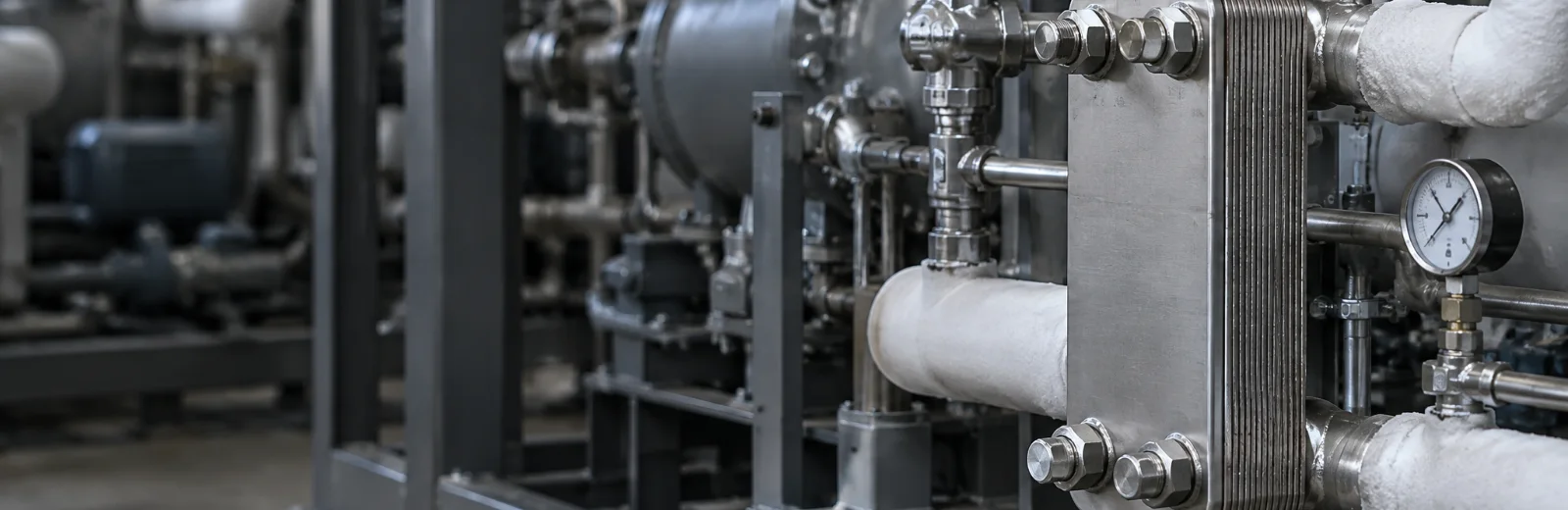
SERIES • UP TO 18 GPM
SWEP B8T
Nickel-brazed - the copper-free option at small size, for ammonia and aggressive media.
+ Learn More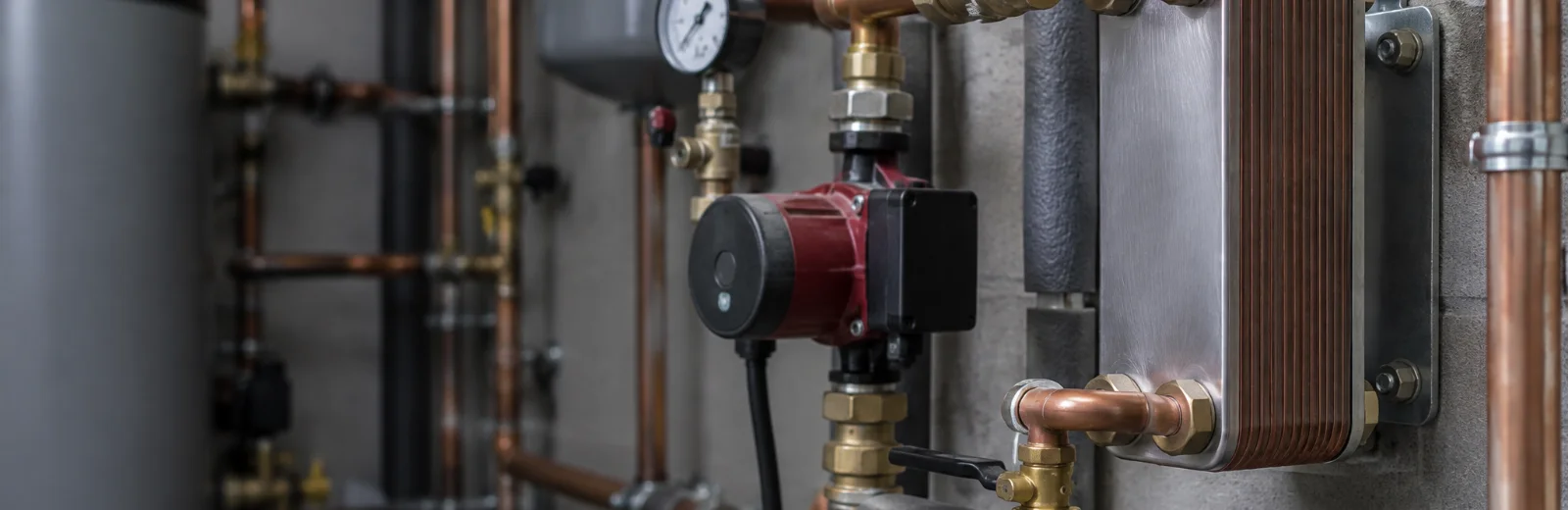
SERIES • UP TO 18 GPM
SWEP B5T
Compact 316 stainless frame for low-flow heating and cooling loops.
+ Learn More
RELATED
Condensers
A condenser does three jobs in one pack: it desuperheats the discharge gas, condenses it, and subcools the liquid. Each happens in a different part.
+ Learn More