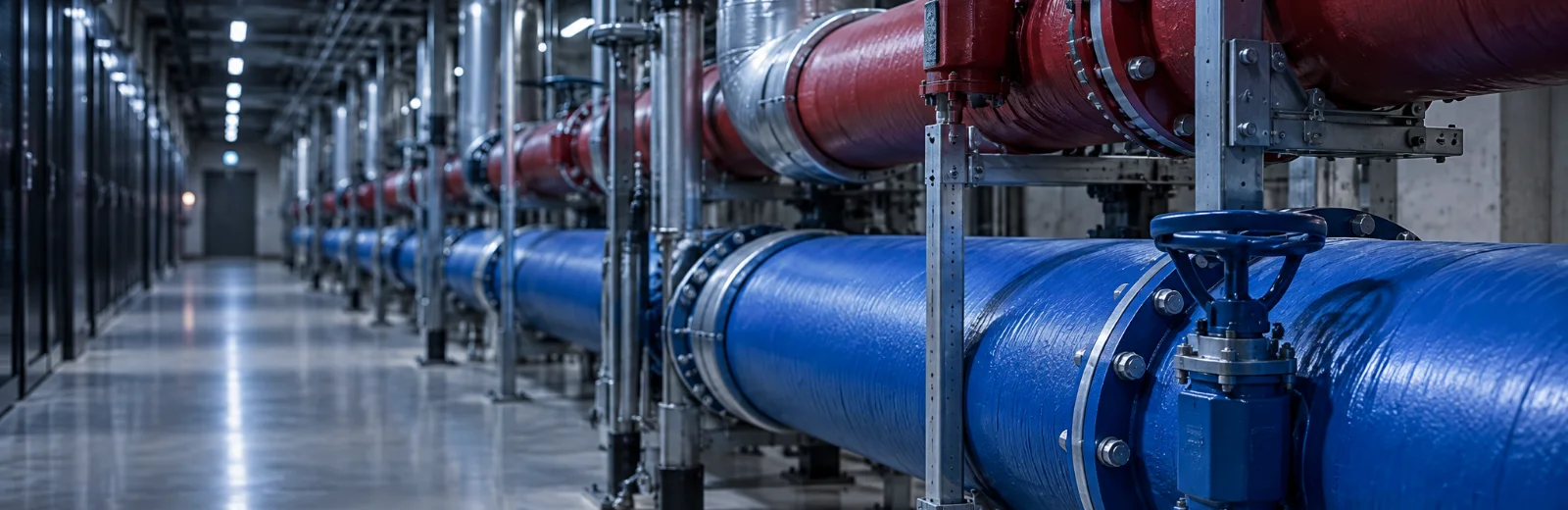
Data Centers

Pressure Drop Compounds

In a coolant distribution unit the pump runs permanently. Every kPa of pressure drop across the exchanger is parasitic load billed every hour for years, so port size and channel geometry are not packaging details - they are the operating cost.

That is why the newest frames in the range lead with ports rather than capacity. B224 and B327 were introduced with large ports for high flow at low pressure drop, and the B327 is rated for heat capture up to 1000 kW.

Pressure drop compounds. A selection that saves capital by running a smaller frame at higher velocity spends that saving on pump energy inside the first year.

The technology loop is clean. Treated, filtered and dosed - the best case for a brazed exchanger. The facility side is less controlled and should carry the strainer.

Heat reuse turns a cost into a line item. The heat rejected by a data center is low grade but enormous, and district networks increasingly want it.
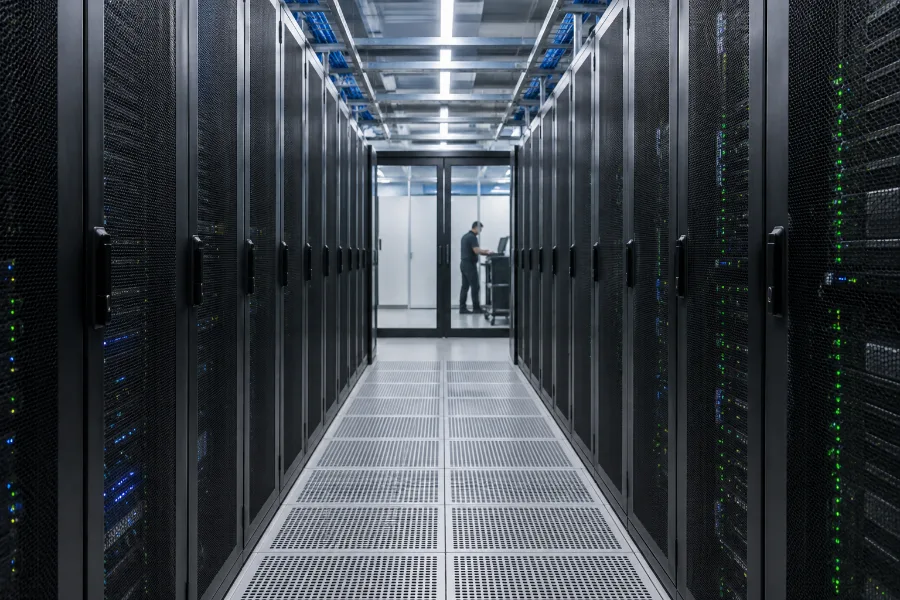
data centers with SWEP brazed plate heat exchangers
Coolant Distribution Coolant Distribution

Pressure Drop Pressure Drop

Heat Reuse Heat Reuse

Redundancy Redundancy

Data Centers Selection

What decides the frame, and what to send with the enquiry.

Duty Inputs

  • Flows: both sides
  • Temperatures: in and out
  • Fluids: named, not described
  • Pressure drop: what is affordable

Typical Frames

Watch Items

  • Send the duty for a check
FRAME MAX FLOW CHANNEL VOLUME NOTE
B60 335 GPM 0.223 dm3 Near-square plate, compact
B224 273 GPM 0.188 dm3 Large ports, AsyMatrix
B327 365 GPM 0.233 / 0.265 dm3 Rated to 1000 kW heat capture
B633 1,540 GPM 0.93 dm3 Campus scale

Sizing a CDU exchanger against the electricity bill

The usual selection instinct - pick the smallest frame that meets the duty - is wrong here, and it is wrong by a margin that shows up on a meter.

A CDU exchanger is one of the very few in a building that never stops. Design-day sizing logic, which tolerates a high pressure drop because the peak is rare, does not apply to a component whose peak is also its average.

Work the arithmetic the other way round. Take the pump curve, take the hours, and price the difference in head between a frame with generous ports and one without. On a facility of any size that difference buys the larger frame several times over across a ten-year life.

The second consideration is what happens to the heat. If a network will take it, the exchanger stops being the first stage of a rejection path and becomes the first stage of a revenue stream - and that changes which side you optimize.


Frames for This Duty
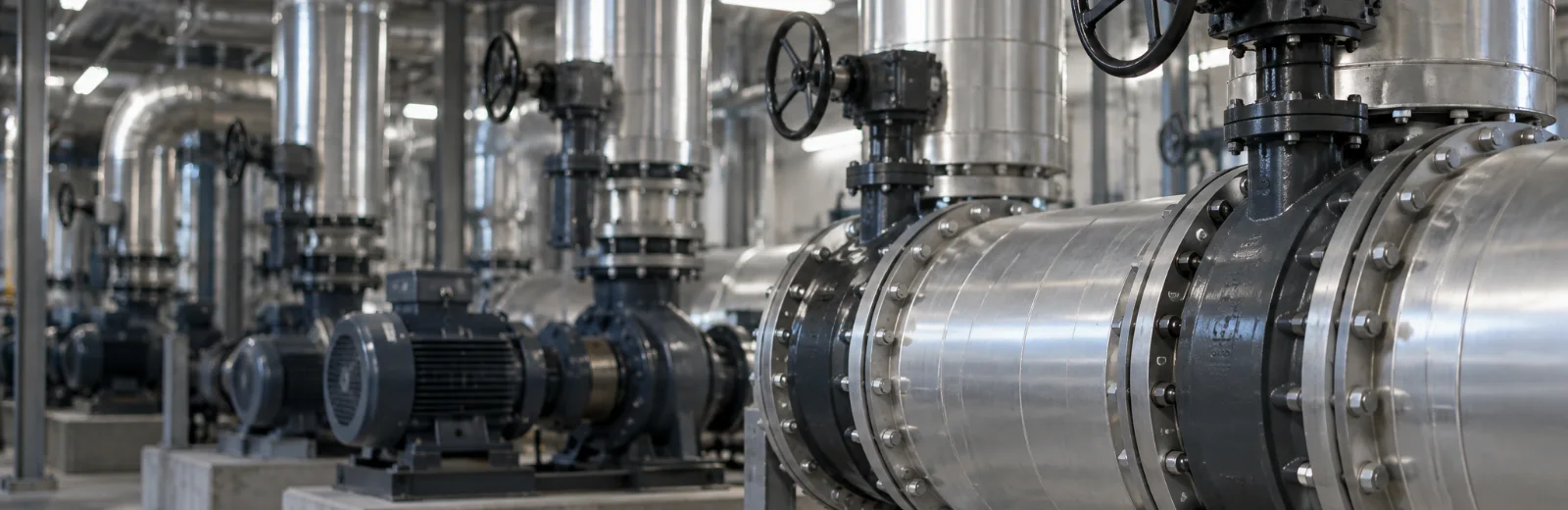

SWEP B224 brazed plate heat exchanger - large ports for data center and district energy duty
SWEP B327 brazed plate heat exchanger - up to 1000 kw - the data center heat reuse frame
SWEP B60 brazed plate heat exchanger - near-square plate, cross-flow geometry, 301 plates

Practical Questions on Data Centers

The means to clean and isolate the exchanger. A brazed unit cannot be opened, so it is cleaned by circulating solution through it, and that needs isolation valves and flushing connections on the facility side from day one.

On a loop that never stops, nobody wants to drain down and cut pipe later to add them. The same goes for pressure and temperture tappings on all four ports: without them a slowly fouling exchanger cannot be told apart from a pump or control problem. Fit them at installation. Cleaning in Place covers the arrangement.

Running both usually costs less to operate. Pressure drop falls steeply as flow per unit falls, so two units sharing the load each run well below their design pressure drop, and the pump sees the benefit every hour. If one is isolated, the other carries the full flow at the pressure drop it was selected for.

A standby unit that sits full of stagnant facility water is also the one more likely to foul. Size each unit for the full duty, then decide the operating mode with the pump curve in hand.

Only if the load is the same as when the unit was specified. Rack densities tend to rise over the life of a hall, and a replacement is the one moment the exchanger can be re-rated without extra downtime.

Send the nameplate designation and the duty the loop carries today. Keeping the same frame with more plates preserves the port positions and changes only the depth of the pack, which is usually the easiest upgrade to pipe. Remember that a published maximum flow, such as 273 GPM for the B224 or 365 GPM for the B327, is a ceiling set by the ports rather than a design point.

It can. A loop running inhibited water or an inhibited glycol blend is ordinary duty for copper-brazed 316 plates. A loop running deionized water is not: deionized water leaches copper from the braze, and the result is a conductivity problem in the coolant long before it is a leak.

That case calls for a copper-free build, the SPS All-Stainless code. Name the coolant and its treatment with the enquiry, and if the fluid is a glycol blend give the concentration, because it changes both the pressure drop and the surface needed.

Quote Request Form:

Questions?

1-805-484-2992

Quotes - Engineering - Sales