Marine and Transport

Seawater Wants SMO 254

Seawater is a chloride problem, and chlorides pit 316 stainless. The material answer is SMO 254 high-molybdenum steel - the MC code - or titanium where the service is harsher still.

The mounting problem is more mundane and just as expensive. A brazed pack is heavy for its size, and on a vessel or a mobile plant it is subject to vibration and shock that a plant room never sees. Support it properly rather than letting the pipework carry it.

Seawater wants SMO 254. , not thicker 316. A 316 frame in seawater service can pit through in a season.

Class approvals. are available - DNV GL, Bureau Veritas, Lloyd's Register and CSA - where the installation requires them.

Mount it on brackets. On the larger frames, pipe-supported mounting is not adequate once vibration is in the picture.
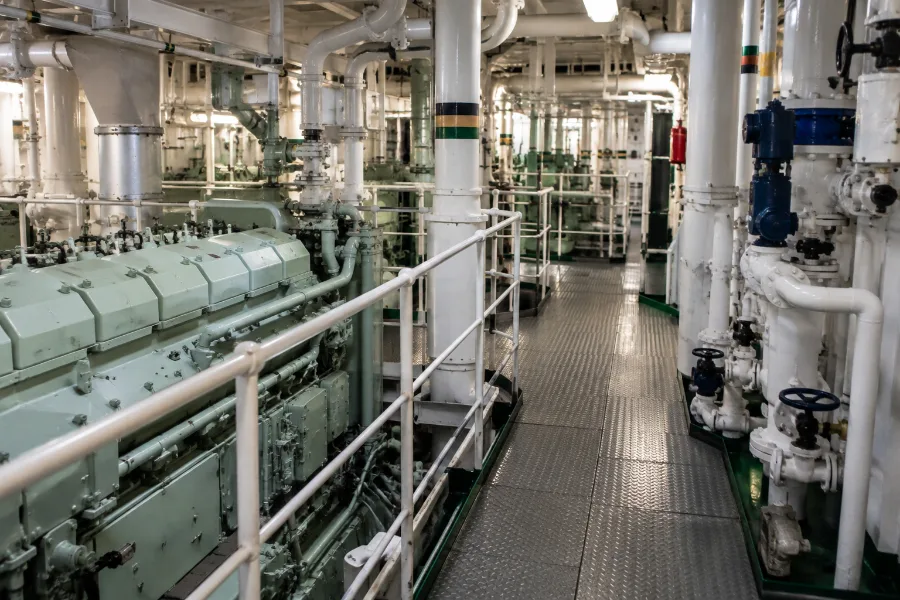

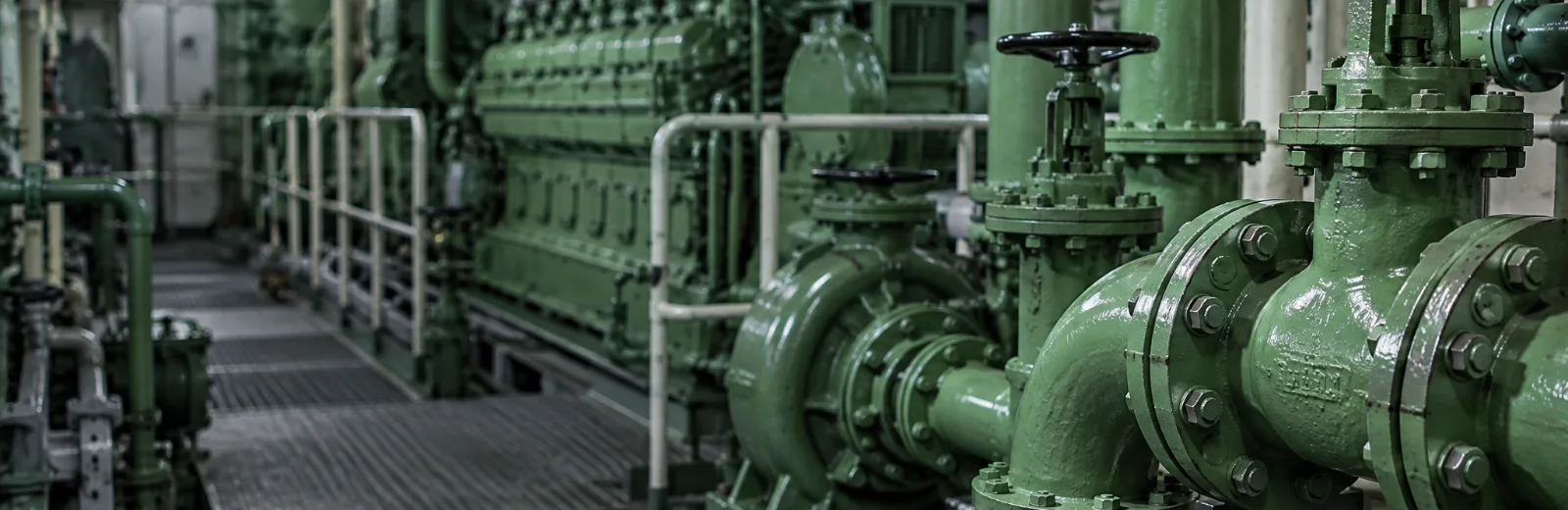
marine and transport with SWEP brazed plate heat exchangers
Seawater Cooling Seawater Cooling
Engine Circuits Engine Circuits
Space and Weight Space and Weight

Chloride Resistance Chloride Resistance

Marine and Transport Selection

What decides the frame, and what to send with the enquiry.

Duty Inputs

  • Flows: both sides
  • Temperatures: in and out
  • Fluids: named, not described
  • Pressure drop: what is affordable

Typical Frames

Watch Items

  • Send the duty for a check
LOOP MATERIAL CLASS NOTE
Jacket water to seawater SMO 254 (MC) S Chloride resistance is the decision
Lube oil cooling 316 (SC) L 14 bar at 225 C, low-theta plates
Hydraulic cooling 316 (SC) L or S Viscosity drives pressure drop
Potable water Double wall S Code-dependent

Jacket water, lube oil and the sea

Most marine brazed plate duty is one of three loops, and each one argues for a different frame.

Engine jacket water is a closed treated loop on one side and raw seawater on the other. The seawater side sets the material; the jacket side sets the temperature. That pairing is why SMO 254 frames show up here more than anywhere except pool heating.

Lube and hydraulic oil cooling is a different shape of problem - viscous, hot, and at a pressure that is usually modest. The L pressure class at 14 bar and 225 C exists for exactly this, and low-theta plates keep the oil-side pressure drop where a pump can live with it.

The third loop is domestic or process water aboard, and that brings potable rules with it if anyone drinks from it.


Frames for This Duty

SWEP B56 brazed plate heat exchanger - smo 254 high-molybdenum plates - the chloride-resistant frame
SWEP B80 brazed plate heat exchanger - the 526 mm standard - and the plate shared by the f80, p80 and v80 evaporators
SWEP B12 brazed plate heat exchanger - h pressure class with dual-over-two-pass capability in a compact frame

What People Ask About Marine and Transport

Standing seawater is harder on the plates than flowing seawater. With the pump off, the water in the channels warms, marine growth settles, and chlorides concentrate under the deposits - the conditions where pitting starts, even on a high-molybdenum plate that copes well in service.

Flush the seawater side with fresh water whenever the vessel or plant is going to stand, and drain and blow it out for a long lay-up. In a cold climate the same trapped water freezes, and water freezing in the channels can split a unit. A cooler that gave years of service and failed after one winter alongside usually failed this way.

The warmest water the vessel will operate in, with the engine at full load. That is the condition with the least temperature difference to work with, and a cooler sized on home-port conditions runs out of capacity in warmer water.

Sizing for the worst case leaves the cooler oversized everywhere else, and jacket water must not be over-cooled. Handle that with a thermostatic bypass on the jacket side. Throttling the seawater instead lowers its velocity in the channels, which invites fouling in a pack that cannot be opened.

The full nameplate designation, the classification society if the installation is classed, and a note of what the unit cools against. The material code deserves a second look: SC means 316 plates, and an SC unit that has pitted through on seawater should be replaced with an MC unit, not another SC.

State the class requirement at the start so the quote is for a unit carrying that approval. Dimensions and connection positions matter more aboard than ashore, because the pipework is rigid and the space is fixed - include a photo of the connection face. Availability is confirmed with the quote.

A central loop is usually the better arrangement for brazed units. One seawater-to-fresh-water exchanger in SMO 254 takes the chloride duty, and everything downstream - lube oil, hydraulic oil, refrigeration condensers - is cooled by treated fresh water and can use standard 316 plates.

The cost is one more temperature step, since each cooler now works against water slightly warmer than the sea, plus a circulating pump. In return, seawater, its strainer and its maintenance are confined to a single unit. Approach matters most on that central cooler, so expect a higher plate count there than on the coolers it serves.

Protection from pressure spikes and from the machine's own movement. Mobile hydraulics see sharp transients every time a valve shifts or a cylinder bottoms out, and pulsation fatigues braze joints even when the peak stays inside the rating. Put the cooler in the low-pressure return or in an off-line cooling loop, never in a working pressure line.

Connect it with flexible hoses, bracket it to the chassis independently of them, and add a bypass so cold, thick oil at start-up is not forced through the pack. The L class, at 14 bar and 225 C, is chosen here for its temperature rating - which is exactly why the cooler has to be kept out of the high-pressure side.

Quote Request Form:

Questions?

1-805-484-2992

Quotes - Engineering - Sales