
1-805-484-2992
Quotes - Engineering - SalesCONSTRUCTION AND RATINGS
Approvals
and
Certifications
Every datasheet lists PED for Europe, UL for North America and KHK for Japan. ASME construction and CRN registration for Canada are available where required.
For potable work the US approvals are NSF/ANSI 61 and NSF/ANSI 372, with NSF 61 rated to 90 C. Elsewhere KIWA, WRAS, WaterMark and SVGW apply.
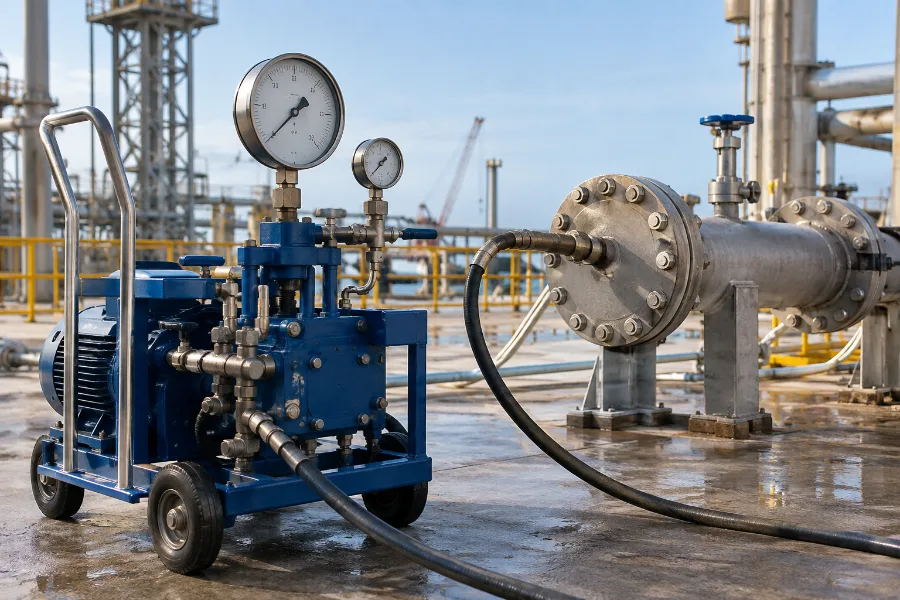
PED, UL, KHK as standard; ASME (-40 C to +150 C) and CRN (-196 C to +225 C) where specified.
Request a QuoteA registered statement that a given exchanger design, in stated materials, may be used for a stated service inside a defined pressure and temperature envelope. It belongs to the unit as built and stamped, not to the frame family in general.
| APPROVAL | COVERS | ENVELOPE |
| PED | Europe, pressure | Per class |
| UL | North America, pressure | Per class |
| ASME | Pressure, where specified | -40 C to +150 C |
| CRN | Canada, provincial registration | -196 C to +225 C |
| NSF/ANSI 61 and 372 | US potable water | 90 C |
| AHRI LLBF | Certified performance | Water, propylene and ethylene glycol |
Materials and Ratings in Practice
Pressure:
Pressure: - PED, UL, KHK as standard; ASME (-40 C to +150 C) and CRN (-196 C to +225 C) where specified.
Potable:
Potable: - NSF/ANSI 61 and 372 in the US; KIWA, WRAS, WaterMark, SVGW elsewhere. Double-wall construction is separately mandated in several jurisdictions.
AHRI certification is a different kind of approval
SWEP holds the first AHRI certified brazed plate heat exchangers, under the LLBF program - Liquid to Liquid Brazed and Fusion Bonded Plate Heat Exchangers. The certification was extended to cover propylene and ethylene glycol as well as water.
That glycol coverage is the part with practical consequences. Before it, a glycol selection meant taking water performance and applying a derating factor, which is exactly the method that produces frames that are simultaneously undersized and over their pressure drop budget.
With certified glycol data the selection is calculated rather than estimated, which removes the commonest source of commissioning surprises on hydronic work.
Approvals and Certifications: Questions From the Field
The narrower one. A pressure class is a category of construction; an approval is a separate envelope laid over it, and a stamped unit has to sit inside both. The L class is described as up to 14 bar at 225 C, but ASME covers -40 C to +150 C, so an ASME-stamped L-class unit cannot be applied at the top of the class temperature.
This catches oil coolers and absorption duty in particular. State the real maximum temperature when asking for a code stamp. Pressure Classes lists the class figures.
No. The approval is part of how the unit is built, tested and documented, and it appears on the nameplate. It has to be on the order.
The field version of this mistake is a standard unit bought on thermal duty alone, installed, and then turned down by the inspector at commissioning because the nameplate carries no code stamp. The exchanger itself is fine and it is still the wrong exchanger. Put the jurisdiction and any specification clause about pressure vessel code in the first enquiry, not the last.
Not automatically. The designation describes the build - frame, plates, material, pressure class, connections. Code stamps and registrations are carried separately on the nameplate, and two units with the same string can differ in what they are stamped for.
Photograph the whole nameplate, including any stamp symbols and registration numbers, and send that with the string. For CRN, add the province where the unit will be installed, since registration is provincial. We will confirm the replacement carries what the original did.
They answer different questions. NSF/ANSI 61 concerns what the wetted materials may contribute to drinking water; NSF/ANSI 372 concerns lead content. A US potable specification commonly names both.
The practical limit is on NSF/ANSI 61, which is rated to 90 C. A potable circuit designed to run hotter than that is outside the listing, whatever the pressure class permits. Neither standard has anything to say about leak separation between the two fluids: that is the job of double-wall construction, covered under Double-Wall Separation.
A relief valve on each side of the exchanger, set at 0.9 times design pressure. The approval treats the installation, not only the unit.
The omission seen on site is a valve on the high-pressure side only. On CO2 the other side can also reach high pressure when the plant is stopped and the charge warms, which is why both circuits are protected. Allow for the valves and their discharge piping when laying out the rack.
No. The LLBF program is liquid to liquid, and the certified fluids are water, propylene glycol and ethylene glycol. A hydronic selection on those fluids rests on certified performance.
Refrigerant duties, oil cooling and other process fluids are outside that program. They are still rated properly, but the AHRI mark does not apply to them, and a specification that demands AHRI certification for a refrigerant evaporator is asking for something the program does not offer. Read the clause to see whether it means the hydronic exchangers only.
Related
SERIES • 18 TO 75 GPM
SWEP B16
All-Stainless construction - copper-free plates and brazing throughout.
+ Learn More