
1-805-484-2992
Quotes - Engineering - SalesHYDRONIC AND PROCESS
Heat
Recovery
That makes plate count the whole conversation. A recovery exchanger with 10 C of approach captures a fraction of what one with 3 C captures, and the difference is plates rather than a different technology.
Frames with high plate counts in small envelopes matter here more than anywhere - the B10T carries 140 plates in a 289 mm envelope for exactly this reason.

The capacity is already there in the waste stream; the exchanger decides how much of it you get.
Request a QuoteIt is a site error rather than a design error, and it is surprisingly common.
Why co-current piping quietly ruins a recovery job
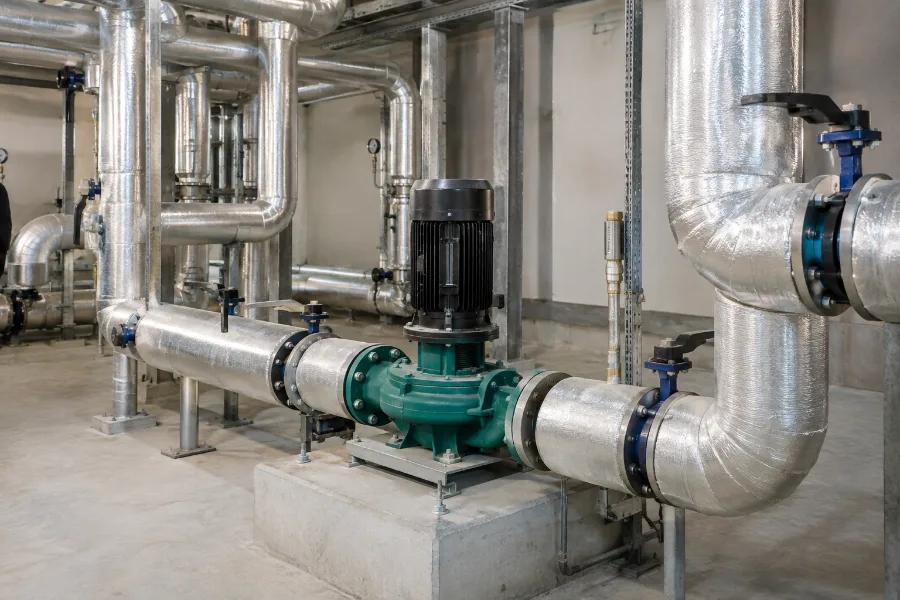
In counter-current flow the cold stream leaving the exchanger meets the hottest part of the hot stream, so the leaving temperature can approach the hot inlet. In co-current flow both streams move the same way and converge on a common temperature somewhere in the middle - which means the cold outlet can never exceed the hot outlet, however much surface you install.
On a recovery duty that ceiling is usually well below the design target, so the job simply never reaches its numbers and nobody can see why. The exchanger is the right size and the piping is the fault.
Check it at commissioning by measuring all four temperatures. If the cold outlet is stuck below the hot outlet, the connections are the place to look.
- Check the waste stream for solids. - Recovery duty often runs on the dirtier of the two streams, which sets the strainer.
Sizing This Duty
Tell us what the waste heat stream is, how hot it runs and how much of it flows, then what you want to heat and to what temperature. Name the fluids exactly. We answer with a frame, a plate count, a pressure class and a quote.
Request a heat recovery quoteOn Site: Heat Recovery
Yes, and no amount of surface gets around it. The stream with the smaller flow changes temperature fastest, so it reaches the other stream's inlet temperature first and the exchange stops there. The larger stream is left with heat it cannot hand over.
In practice this means the approach closes at one end of the pack only. If the recovered-side flow can be varied, matching it more closely to the waste stream often does more than adding plates. Send both flows as they really run, not as the pump nameplates read.
Because the peak is rare. A waste stream from a process, a compressor or a drain usually swings in both temperature and flow, and a selection built on the best hour of the day overstates what is recovered across the rest of it.
Give us the range, and roughly how the hours fall across it. The plate count is then chosen for the condition that carries most of the energy, which is seldom the hottest one.
Adding plates in paralell lowers pressure drop, because the same flow is split across more channels. What raises it is the other route to a close approach: H plates with their higher heat transfer, or a multi-pass arrangement such as the three-pass B45, which sends the fluid through the pack more than once.
The trade is real on recovery duty because the waste stream often has little pump head to spare. State the allowable pressure drop on each side with the enquiry; it frequently decides between a long single-pass pack and a shorter multi-pass one. See Pressure Drop.
No. Take all four temperatures and both flows before the old unit comes out. If the piping turns out to be co-current, the old exchanger may have been adequate and the replacement only needs to be connected correctly.
If the piping is right and the approach was simply too wide, the same frame with more plates is the least disruptive fix: port positions stay where they are and only the pack depth grows, so the pipework moves in one direction. Send the nameplate designation along with the measured figures and we will rate both options.
Trend the approach and the pressure drop together. Fouling shows as a widening approach at the same flows along with a rising pressure drop on the dirty side. A process change moves the temperatures without moving the pressure drop.
Because a brazed unit cannot be opened, the remedy is circulation cleaning, and it works far better early than after the channels have started to block. Fit the valves and connections for it at installation, on the waste side at least. Cleaning in Place describes the setup.
Often. The default SC build, 316/316L plates with copper braze, suits ordinary water and glycol. A waste stream carrying chlorides, such as pool water or brackish or chlorinated cooling water, pits 316 and calls for SMO 254 plates, the MC code.
Streams containing ammonia attack the copper braze itself, and deionized water leaches it, so both need a copper-free construction. Describe the waste stream by what is in it rather than by where it comes from.
Frames for This Duty
SERIES • 18 TO 75 GPM
SWEP B10T
A high plate-count small frame - 140 plates in a 289 mm envelope.
+ Learn More
SERIES • 18 TO 75 GPM
SWEP B85
160 plates on the 526 mm frame, with tighter channels than the B80.
+ Learn More