
1-805-484-2992
Quotes - Engineering - SalesPOTABLE AND SPECIALTY
Oil
Cooling
The L pressure class is rated up to 14 bar at 225 C and is specifically cited for engine oil cooling. That combination looks odd next to the standard class at 31 bar and 155 C until you notice what it is trading.
Oil duty rarely needs high pressure but frequently needs high temperature, and L is the class built around that trade.
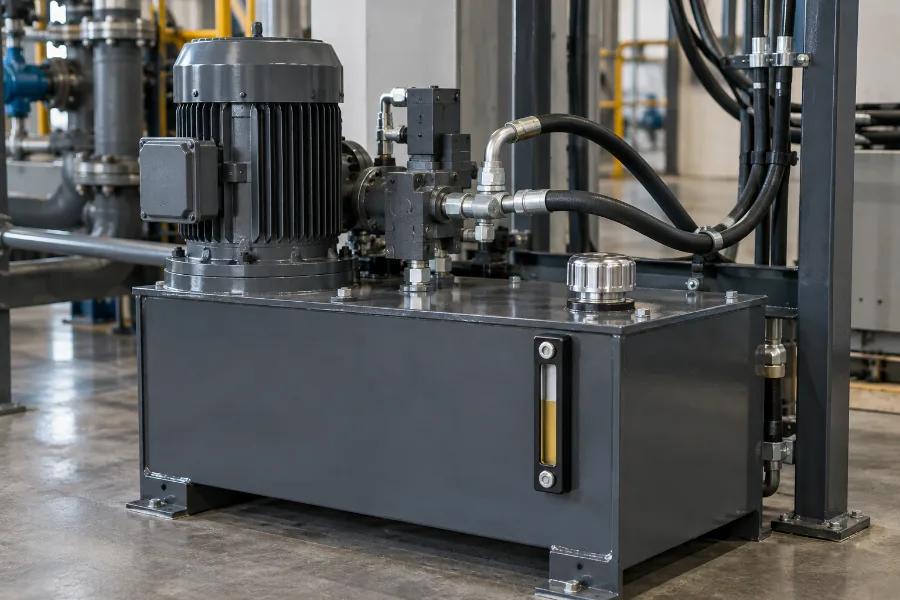
The instinct to specify the highest-performing plate is strong, and on oil it backfires.
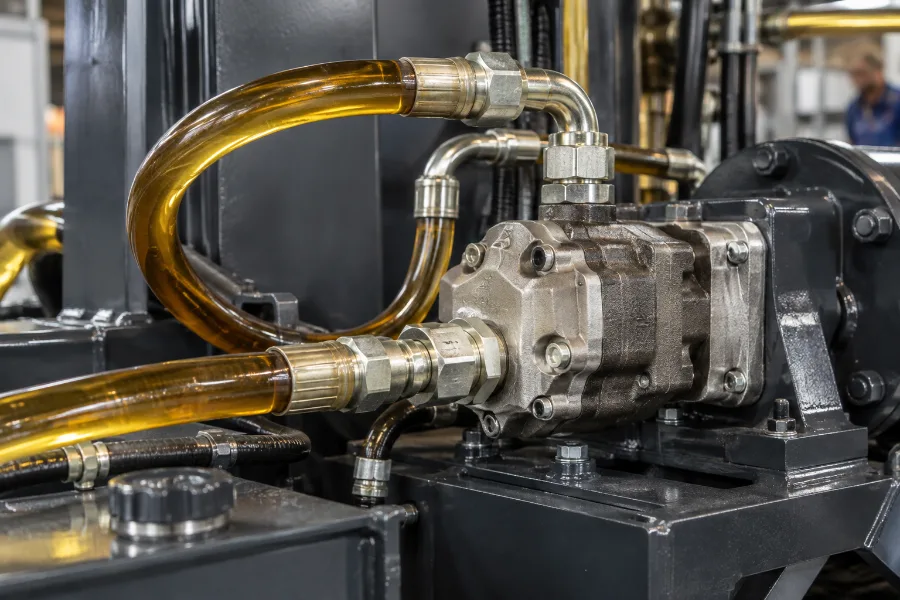
Why an H plate is usually the wrong answer on oil
H-type plates have an obtuse chevron angle that creates high turbulence and a high heat transfer coefficient. They also create the highest pressure drop, and pressure drop scales badly with viscosity.
On water the penalty is manageable. On a heavy oil the same plate can produce a pressure drop the pump cannot deliver, at which point the flow falls, the coefficient falls with it, and the high-performance plate ends up transferring less heat than a low-theta one would have.
Specify L-type plates on the oil side and buy the coefficient back with surface area. The pump will thank you for the life of the installation.
- Transformer oil usually calls for double wall - , so that a leak cannot put oil into the water system or water into the transformer.
Sizing This Duty
An oil cooler is selected on the oil, so send its grade or viscosity with the oil flow and temperatures in and out. Add the coolant, its flow and inlet temperature, and the oil-side pressure drop you can accept. Frame and plates are returned with the quote.
Request a oil cooling quoteOil Cooling in Practice
Because oil viscosity climbs steeply as temperature falls, and pressure drop follows viscosity. A selection that fits comfortably inside the pump's head with the oil hot can demand several times that with the oil cold, and the full pump flow is pushed through the pack before the system has warmed up.
The fix belongs in the circuit, not the exchanger: a bypass or thermostatic valve that routes cold oil around the cooler until it reaches temperature. It also stops the cooler over-cooling the oil at light load. Give the lowest oil temperature along with the design point, so the pressure drop is checked at that condition too.
The oil grade by name and its viscosity at two temperatures, the oil flow, the heat to be removed or the oil temperatures in and out, the cooling water flow and temperature, and the pressure drop the oil pump can spare. "Hydraulic oil" or "gear oil" alone is not enough - two oils with the same description can differ widely in viscosity.
Expect the oil side to control the result. Oil has a far lower heat transfer coefficient than water, so nearly all the resistance sits on the oil side, and adding cooling water flow does little. Surface area and the oil-side plate pattern are what move the duty.
Where it leaked and why. A crack at a connection, or a cross-leak with clean plates, usually means fatigue: pressure spikes as valves shift, pump pulsation, or a cooler installed in a pressure line when the return line would have done. A like-for-like replacement in the same position has the same life.
Pitting from the water side is a different cause with a different answer - chlorides in the cooling water call for SMO 254 plates, the MC code, in place of 316.
Send the complete nameplate designation, and keep the pressure class letter as stamped, since it fixes the temperature rating as well as the pressure.
It is common, and it shortens the life of the cooler. Throttling the water lowers its velocity in the channels, and slow, warm water against a hot plate is where scale and deposits form. A brazed unit cannot be opened to remove them, so the fouling stays until the unit is cleaned in place or can no longer hold temperature.
Control on the oil side instead, with a thermostatic bypass, and keep the water at full flow behind a strainer.
Frames for This Duty
SERIES • 18 TO 75 GPM
SWEP B80
The 526 mm standard - and the plate shared by the F80, P80 and V80 evaporators.
+ Learn More
SERIES • 18 TO 75 GPM
SWEP B12
H pressure class with dual-over-two-pass capability in a compact frame.
+ Learn More
SERIES • UP TO 18 GPM
SWEP B8T
Nickel-brazed - the copper-free option at small size, for ammonia and aggressive media.
+ Learn More