
Food and Beverage

CIP Circuits

The distinction matters for specification. A utility exchanger in a food plant is a standard industrial selection with food-plant discipline around it: cleanability, no dead legs, and materials that survive the cleaning chemistry rather than the product.

Where the fluid is potable water rather than glycol, the potable rules apply and the selection changes - in several jurisdictions that means double-wall construction.

CIP circuits. run hot caustic and acid on a cycle. That is harder on a brazed unit than the process duty it serves, and it is the duty to size the materials against.

Glycol loops. carry the derate that catches people out: a frame sized on water will be short on a 30 percent propylene mix.

Cleanability is a strainer question. Product-bearing utility water carries solids; the datasheet particle limit sets the mesh.
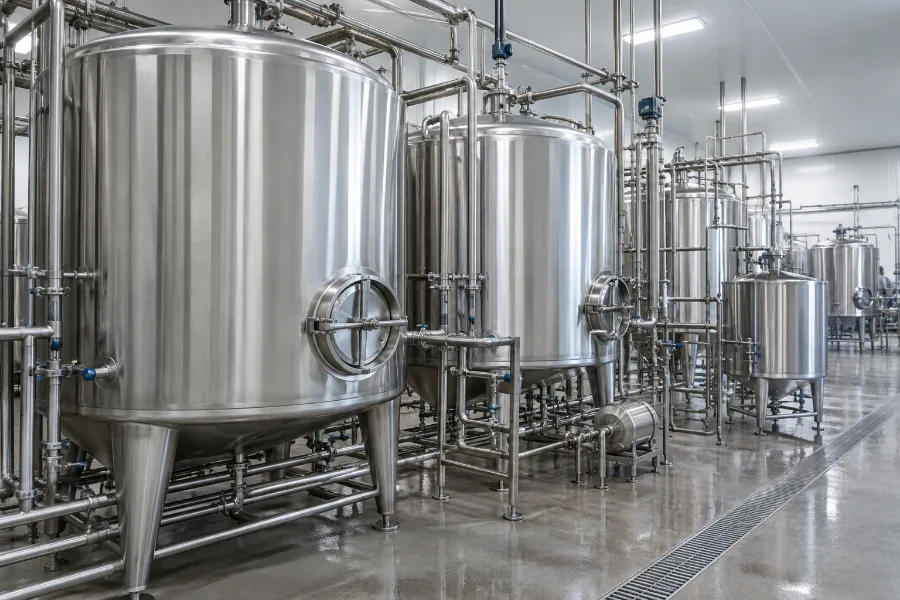
food and beverage with SWEP brazed plate heat exchangers
Brewery Duty Brewery Duty
Dairy Processing Dairy Processing

CIP Systems CIP Systems
Product Safety Product Safety

Food and Beverage Selection

What decides the frame, and what to send with the enquiry.

Duty Inputs

  • Flows: both sides
  • Temperatures: in and out
  • Fluids: named, not described
  • Pressure drop: what is affordable

Typical Frames

Watch Items

  • Send the duty for a check
DUTY TYPICAL FRAME WATCH
Glycol chilling loop B120T, B45 Glycol derate on flow and coefficient
CIP solution heating B25T, B28 Cleaning chemistry, not product chemistry
Hot water generation B16DW frame Potable rules if the water is potable
Tank jacket circuit B10T, B25T Low flow - consider pass count

Where a brazed unit fits in a food plant and where it does not

The honest line is that brazed plate exchangers belong on the utility side.

Anything that touches product wants a hygienic design - openable, inspectable, with documented surface finish and drainability. A brazed pack is none of those things, and putting one on product duty to save money is a decision that gets revisited during an audit.

On the utility side the argument reverses. Glycol chilling, hot water generation, CIP solution heating and tank jacket loops are all closed, controlled duties where the absence of gaskets is an advantage and the inability to open the unit costs nothing.

The interface between the two is usually an intermediate loop, and that loop is exactly what a brazed frame is for.


Frames for This Duty
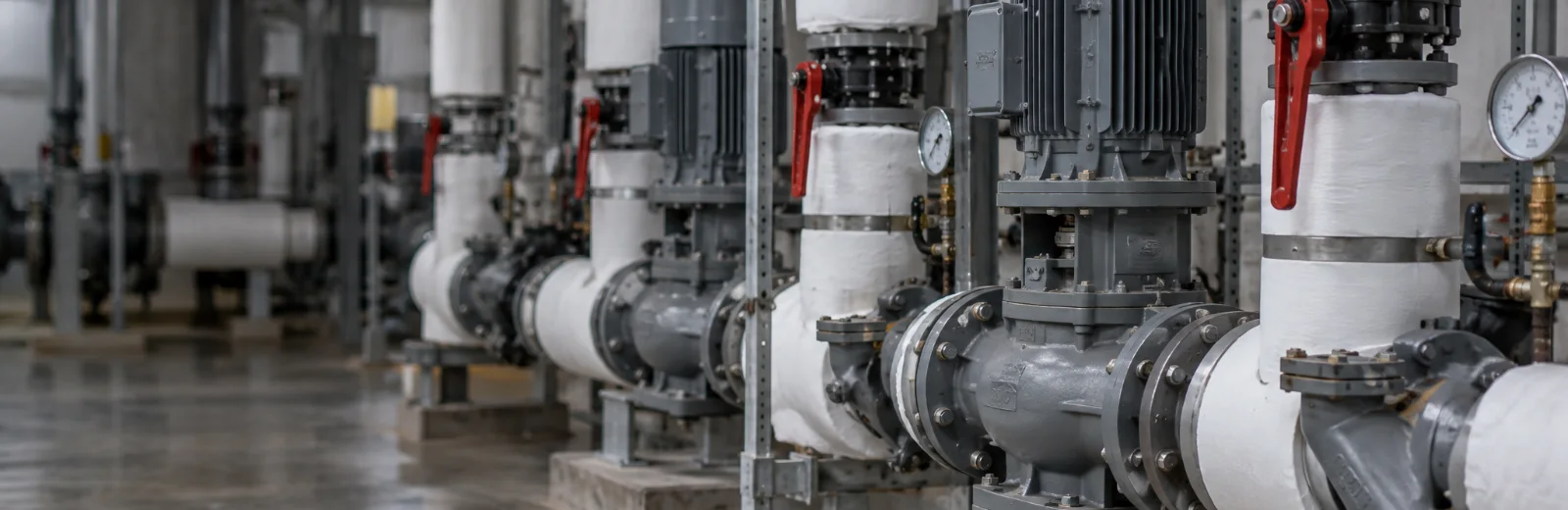

SWEP B25T brazed plate heat exchanger - the most widely stocked frame in the range
SWEP B45 brazed plate heat exchanger - three-pass capable on the 525 x 243 mm frame
SWEP B120T brazed plate heat exchanger - the widely stocked mid-large frame, to 250 plates

Worth Knowing About Food and Beverage

Yes - it changes the braze. Ammonia attacks copper, so a standard copper-brazed unit (the SC or NC material codes) is not an option with ammonia on either side. The copper-free constructions are SN, with a nickel-alloy braze, and SPS, where plates and braze are both stainless.

The same reasoning applies to deionized or ultrapure rinse water, which leaches copper out of the braze. Food plants often have both on one site, so name every fluid on both sides of each exchanger instead of describing the duty as glycol chilling. The options are set out under Plate and Brazing Materials.

Because jacket flows are small for the heat they move, and a small flow spread across a single-pass pack leaves very little velocity in each channel. Low velocity means a poor heat transfer coefficient and channels that collect whatever the loop carries.

A multi-pass arrangement sends the same flow through fewer channels at a time, more than once, which restores velocity at the cost of pressure drop. The pass arrangement is written into the designation after the slash. The usual error is trying to fix a weak jacket circuit by adding plates, which lowers the velocity further and makes it worse.

The full nameplate designation - including the material code, the pressure class letter and the connection list - plus the fluids now running on each side. Skids get repurposed, and the unit on the nameplate may have been chosen for a duty the skid no longer does.

Say how it failed. A unit that leaked between circuits after years on hot caustic and acid will do it again if replaced like for like; that is the moment to review the material. A leak at a connection points at pipe load or valve hammer instead.

With the designation and the failure we can quote the same unit or a corrected one.

They can. A CIP cycle steps between rinse, caustic, acid and hot water on actuated valves, and every abrupt closure sends a pressure spike through the exchanger. Add the temperature swing of a cold rinse following a hot wash and the pack sees a mechanical and thermal cycle many times a day.

Braze joints tolerate steady pressure far better than repeated shocks. Slow the valve actuation, avoid dead-heading the pump against the unit, and bring hot solution on progressively where the sequence allows. The symptom of getting it wrong is a cross-leak in a unit whose plates show no corrosion at all.

There is an approval limit to respect in addition to the unit's own rating. NSF/ANSI 61, the drinking water approval, is limited to 90 C. A hot water generator can be mechanically capable of more and still be outside a potable approval if the water side is run hotter than that.

Plants wanting hotter washdown water sometimes raise the setpoint after commissioning without anyone revisiting the approval. Where the water is potable and double-wall separation is required, state the outlet temperature needed so the approval and the construction are checked together.

Quote Request Form:

Questions?

1-805-484-2992

Quotes - Engineering - Sales