
1-805-484-2992
Quotes - Engineering - SalesIndustrial Process
L
Five pressure classes cover the range, and they trade pressure against temperature rather than forming a simple ranking. The L class is the lowest pressure of the five and the highest temperature - 14 bar at 225 C - which is exactly what hot oil needs.
Reading the class letter as a quality grade will lead you to the wrong frame. Read it as a shape: how much pressure, at what temperature, with or without fatigue qualification.
L. up to 14 bar at 225 C. Engine oil cooling, absorption chillers.
S. 31 bar at 155 C. General purpose.
M. up to 45 bar at 135 C, fatigue tested. The refrigerant class.
H. 45 bar at 155 C. Common in the process industry.
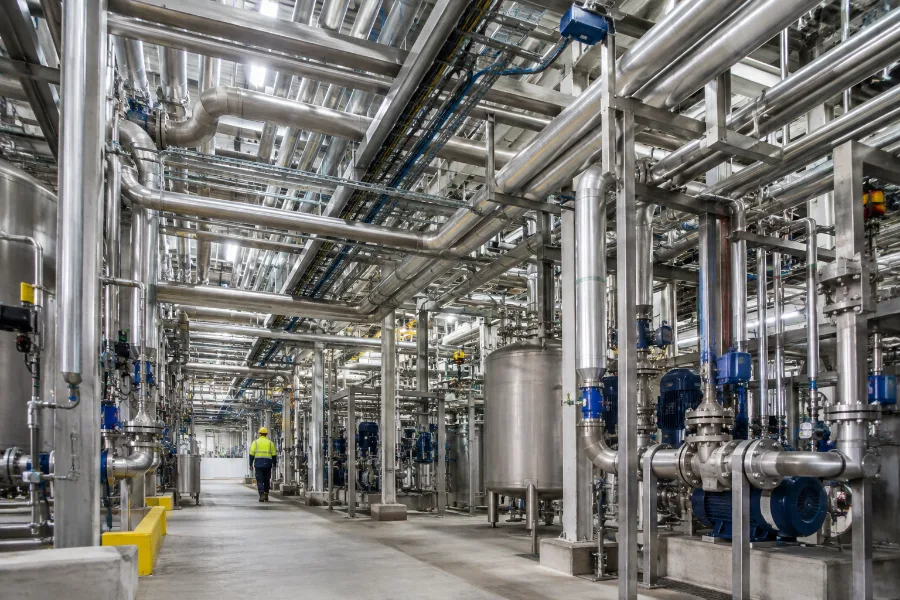
 Process Cooling
 Oil Cooling
 Fouling Control
 Washdown Duty
Industrial Process Selection
What decides the frame, and what to send with the enquiry.
Duty Inputs
- Flows: both sides
- Temperatures: in and out
- Fluids: named, not described
- Pressure drop: what is affordable
Typical Frames
- SWEP B12 - dual circuit 45 bar
- SWEP B56 - smo 254 plates
- SWEP B60 - near-square block
- SWEP B400T - 2p1p passes
Watch Items
- U
| CLASS | RATING | STATED USE |
| L - Low | up to 14 bar at 225 C | Engine oil cooling, absorption chillers |
| S - Standard | 31 bar at 155 C | A wide variety of applications |
| M - Medium | up to 45 bar at 135 C | Refrigerants such as R410A |
| H - High | 45 bar at 155 C | Common in the process industry |
| U - Ultra | 64 to 140 bar | CO2 as a refrigerant |
Materials are chosen by what fails, not by what sounds better
Plate material and braze material are two separate decisions, and it is usually the braze that decides whether a unit survives.
Plates come in AISI 304, AISI 316/316L and SMO 254 high-molybdenum steel. Braze is copper, nickel or stainless. The braze sets the temperature ceiling - roughly 185 C for copper, around 350 C for nickel - and it sets chemical compatibility.
Two situations rule copper out completely. Ammonia attacks it, so NH3 duty needs a copper-free filler. Deionized and ultrapure water will leach copper into the stream, which disqualifies the unit for pharmaceutical, semiconductor and laboratory service.
Chlorides are the other common killer, and they attack the plate rather than the braze. Pool water, seawater and brackish cooling water pit 316 stainless. The answer is SMO 254 - the material code that puts the B56 in the range - not a thicker 316 plate.
Frames for This Duty
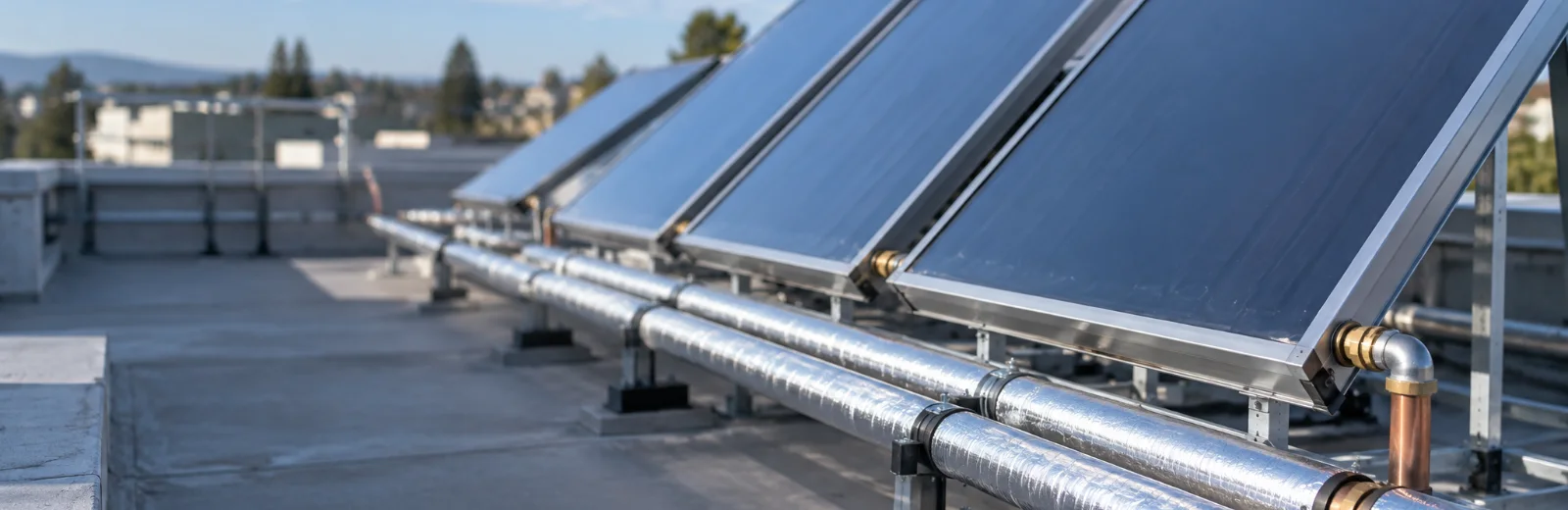
SERIES • 18 TO 75 GPM
SWEP B12
H pressure class with dual-over-two-pass capability in a compact frame.
+ Learn More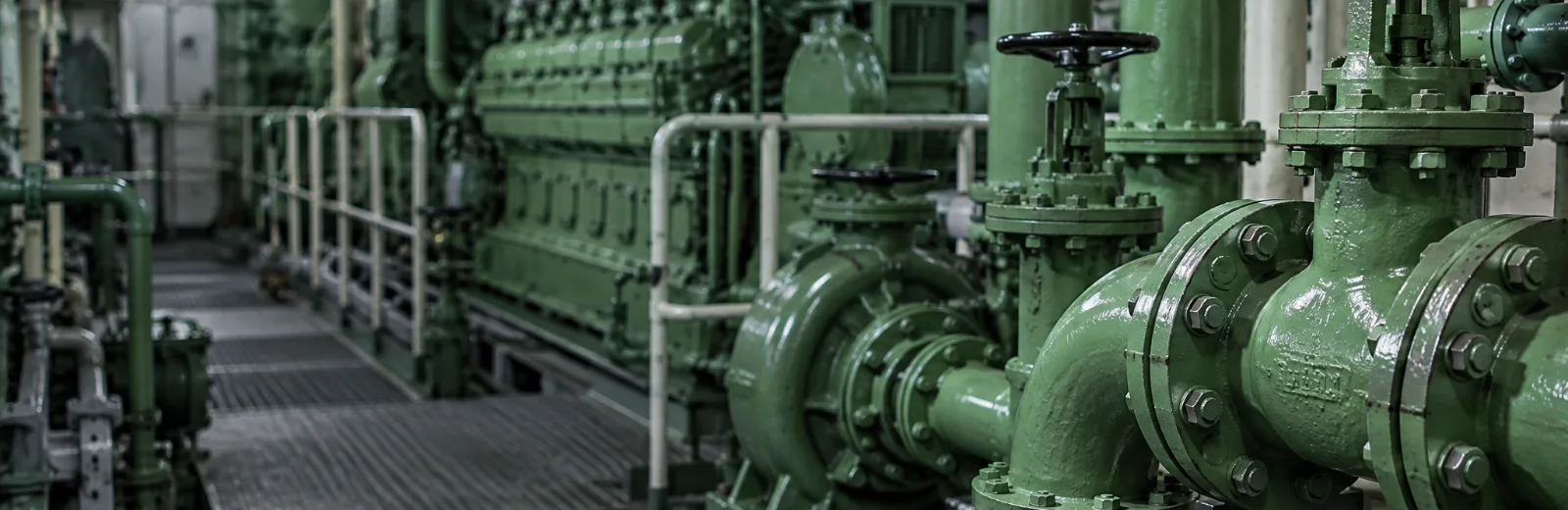
SERIES • 200 TO 400 GPM
SWEP B56
SMO 254 high-molybdenum plates - the chloride-resistant frame.
+ Learn More