
1-805-484-2992
Quotes - Engineering - SalesHYDRONIC AND PROCESS
Free
Cooling
The number of hours per year free cooling can carry the load depends entirely on how small an approach the exchanger holds. A unit with 2 F of approach is available for many more hours than one with 5 F, and those extra hours are the entire return on the investment.
This is a duty where buying plates is straightforwardly buying payback.
On design day free cooling does nothing - it earns its money in the shoulder seasons.
Request a QuoteFree cooling is the one duty where the conventional sizing question is the wrong question.
Sizing against hours rather than tons
A conventional exchanger is sized to meet a peak. A free cooling exchanger is sized to maximize the number of hours in which the tower can make useful water - and that is a distribution, not a single point.
Run the selection against a weather file. For each bin of wet-bulb temperature, ask whether the tower can produce water cold enough that, after the exchanger's approach, the building loop is satisfied. Sum the hours. Then do it again with two more degrees of approach and see how many hours you lost.
That second number is what plate count is worth, and it is usually a much larger figure than the capital difference between the two frames.
- Large ports keep the parasitic pumping low - , which matters because the exchanger is in circuit whenever free cooling is active.
Sizing This Duty
Free cooling is sized on approach, so start with the tower water temperature available and the chilled water temperature wanted. Add both flows, the tower water quality and any code requirement, and we return the frame and plate count with a quote.
Request a free cooling quoteFree Cooling in Practice
Give the condition at which you expect the changeover to happen: the building load in the shoulder season, the chilled water supply temperature the building will accept at that load, and the tower water temperature you can make at the corresponding wet bulb.
Say whether the chilled water setpoint can be reset upward at part load. A loop that tolerates warmer supply water in spring and fall gains hours just as surely as a tighter approach does, and it costs no plates. The two together decide the frame.
Open tower water happened. It carries scale, silt and biological growth, and a film on the plates takes away the tight approach first, because that is the part of the performance with the least temperature difference behind it. The tower-side pressure drop usually climbs at the same time.
A brazed unit cannot be opened, so the defense is a strainer ahead of it and valved connections for circulating a cleaning solution. Fit both at installation. Retrofitting them means draining and cutting the loop during the season you want the unit running. Cleaning in Place describes the procedure.
Keep water moving through it and keep it out of the cold. The risk is not during operation but at standstill: a unit in an unheated plant room or near an outside wall, with stagnant water in the channels, can freeze and split. A brazed pack that has split is scrap.
If the ambient side is a dry cooler on glycol rather than a tower, the freeze risk moves to the building-water side of the plates whenever the glycol arrives below freezing and the building pump is off. Interlock the two pumps, and tell us the glycol type and concentration so the rating is run on the real fluid.
It can. A tower concentrates whatever is dissolved in the make-up water, and chlorine-based treatment adds to it. In chloride-bearing or chlorinated cooling water, 316 stainless can pit, and a pit through a thin plate is an internal leak between tower water and the building loop.
The material code for that service is MC: SMO 254 high-molybdenum plates with copper braze. For ordinary treated water the SC build in 316/316L is the normal choice. Send a water analysis with the enquiry if you have one.
Order the same string if the unit delivered the hours you expected. If the chiller was starting earlier in the season than planned, replacement is the cheap moment to fix it.
Within a frame, added plates deepen the pack but leave the port positions on the front cover where they are, so existing piping usually lines up. The B120T runs to 250 plates. Beyond that the answer is a larger frame such as the B60 or B224, and the piping changes with it. Send the nameplate designation and the temperatures you actually logged, and we will show what each option gains.
Frames for This Duty

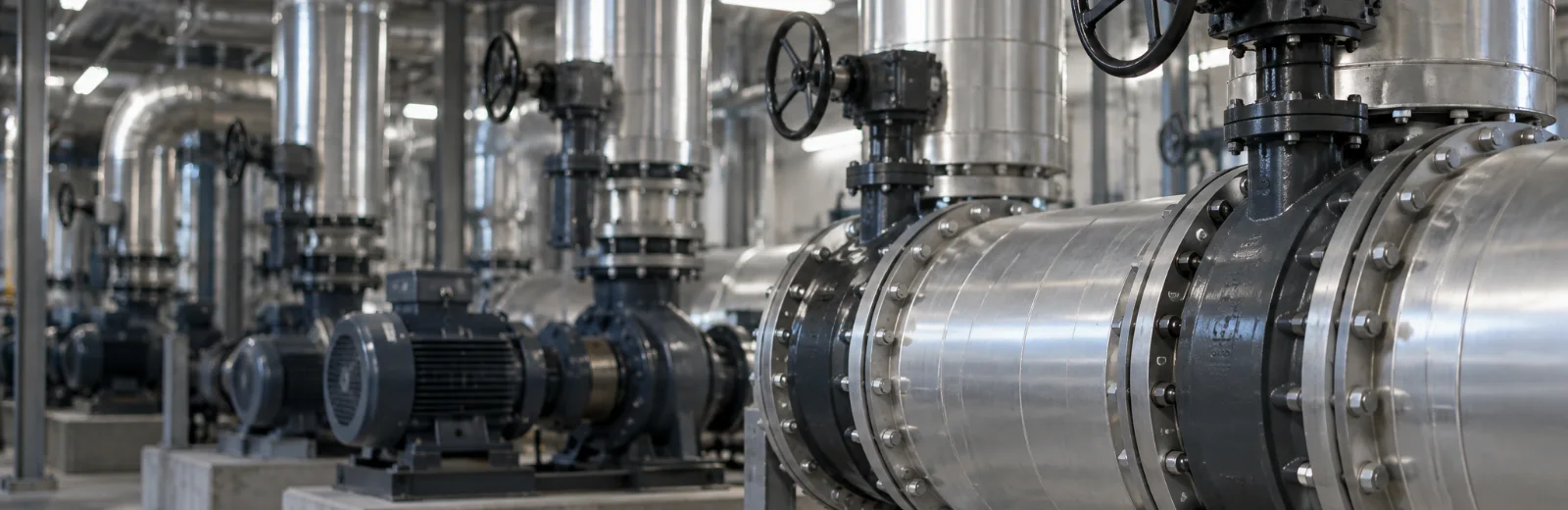
SERIES • 200 TO 400 GPM
SWEP B224
Large ports for data center and district energy duty.
+ Learn More