District Energy

Tight Approach is Bought with Plates

SWEP has delivered millions of brazed exchangers into district energy networks, and the large end of the range exists because of that market. These are frames running to 1,540 gallons a minute in a package with no gaskets in it.

A gasketed plate-and-frame unit of the same duty is serviceable but carries a gasket replacement cycle and a leak path that develops with thermal cycling. A buried or unattended substation does not want either.

Tight approach is bought with plates. B439 and B500T reach 420 plates on a 979 mm plate; B649 takes the same count onto a 1232 mm plate. Expect high plate counts - it is not oversizing.

Return temperature is the product. Every degree the substation fails to recover is capacity the network cannot sell and pumping energy it spends anyway.

Newer frames lead with port size. B224 and B327 were designed for high flow at low pressure drop, and the B327 is rated for heat capture up to 1000 kW.
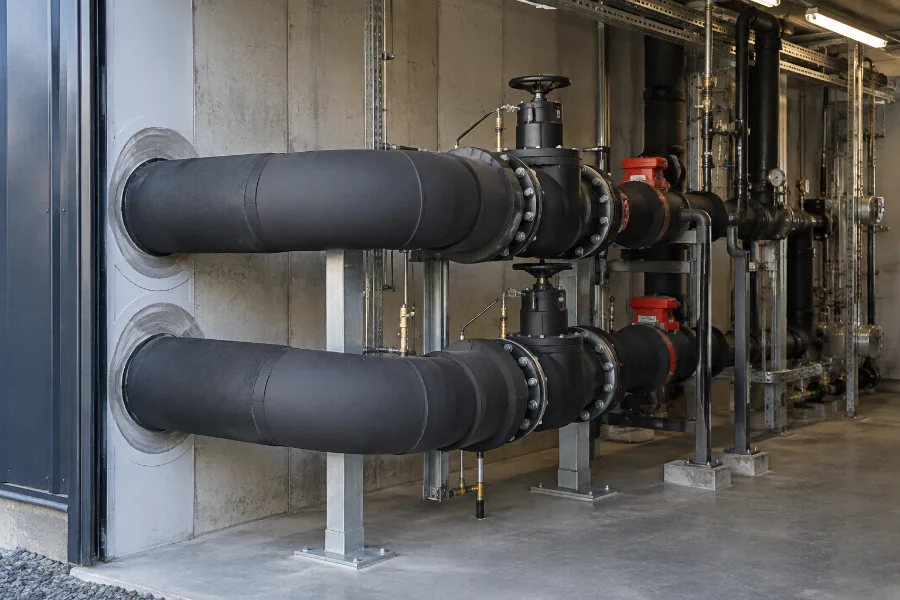

district energy with SWEP brazed plate heat exchangers
Substations Substations
Primary Return Primary Return

Large Ports Large Ports

Network Isolation Network Isolation

District Energy Selection

What decides the frame, and what to send with the enquiry.

Duty Inputs

  • Flows: both sides
  • Temperatures: in and out
  • Fluids: named, not described
  • Pressure drop: what is affordable

Typical Frames

Watch Items

  • Send the duty for a check
FRAME MAX PLATES MAX FLOW TYPICAL ROLE
B120T 250 120 GPM Small substation
B427 420 685 GPM Dual circuit, central plant
B439 420 685 GPM Tight approach at high flow
B649 420 1,540 GPM Network trunk

Why the large brazed frames displaced gasketed units here

Substations are the duty that proved brazed construction could go big.

The objection to a brazed unit at this scale used to be that it cannot be opened. In a substation that turns out to matter less than expected: the primary side is a closed, treated, filtered network, and the secondary side is a building loop that is also closed. Neither is the dirty open-tower water that makes serviceability essential.

What does matter is that nobody visits. A substation in a basement or a pit gets looked at when something goes wrong, and a gasket that has been thermally cycling for a decade is the thing most likely to go wrong. Removing it removes the visit.

The remaining discipline is filtration. A brazed unit on a network with poor water quality will foul, and cleaning it in place is more awkward than pulling a plate pack. Get the strainer right and the argument is settled.


Frames for This Duty
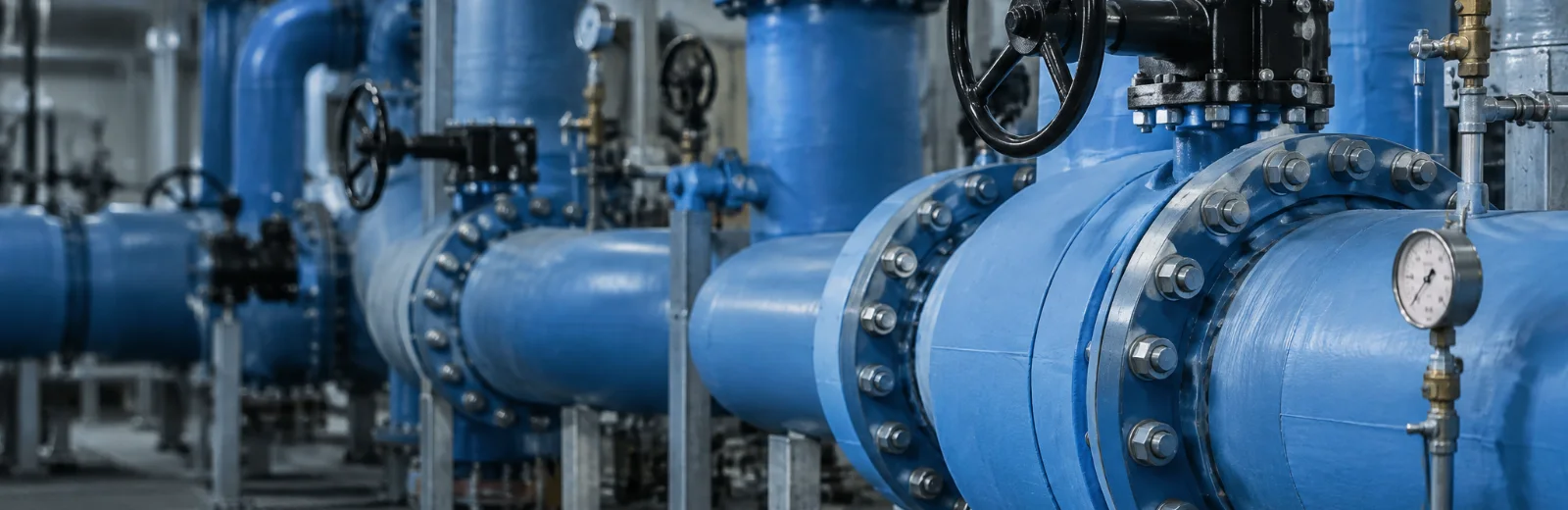

SWEP B427 brazed plate heat exchanger - 420 plates, dual circuit, 685 gpm
SWEP B439 brazed plate heat exchanger - 979 mm tall, 420 plates - long thermal length at high flow
SWEP B500T brazed plate heat exchanger - shares the b439 envelope with a different plate generation

What People Ask About District Energy

At the piping and the flows, before the exchanger. A unit piped co-current cannot close the approach whatever its plate count. A secondary pump delivering less than design flow leaves the primary water with nowhere to give up its heat, and an oversized primary control valve that hunts sends slugs of hot water straight through to the return.

Then check for fouling by comparing the pressure drop across each side at a known flow with the commissioning record. Only once those are ruled out is plate count the question - and by then the measured temperatures and flows are exactly what is needed to re-rate the unit.

A single B649 has a maximum flow of 1,540 GPM, and one unit means one set of connections and the smallest footprint. Its weakness is turndown and cover: at summer load the flow per channel is a fraction of design, and there is no standby if the unit has to be isolated for cleaning.

Two frames in parallel, each sized for part of the peak, let one be valved off in the low season so the other keeps its channel velocity, and they keep the building supplied while one is cleaned in place. The cost is more pipework and valves. For an unattended substation feeding a site that cannot lose heat, the pair is usually the better buy.

Start from the duty, not the old unit's model. The two constructions do not map across by plate count or frame size, so the selection is made from the flows, the four temperatures and the allowable pressure drop on each side, ideally taken from the original data plate.

Expect pipework changes. A brazed frame is far more compact, its ports will not match the old frame, and it needs brackets or feet of its own. Fit strainers and cleaning connections at the same time, because the new unit will be cleaned in place. Record the network design pressure and temperature as well - they decide the pressure class.

The one whose rating covers the network's design pressure and design temperature together. The class letter at the end of a designation is a category: S, for example, is 31 bar at 155 C. What governs a particular unit is the rating stamped on it and the approval it carries.

Approvals have temperature envelopes of their own. ASME covers -40 C to +150 C, so a hot primary can sit inside a unit's mechanical rating and outside that approval range. State the code required along with the network design conditions; the Pressure Classes page lists the categories.

It pushes the selection toward more plates, a lower-theta plate, or a frame with larger ports. A tight approach and a low pressure drop pull in opposite directions on plate pattern: an H plate reaches the approach with less surface but spends head doing it. Adding plates is the one lever that helps both.

At high flow the ports themselves become the restriction, which is the reasoning behind frames such as the B327 that lead with port size. Work from the differential available at the worst point of the season, not the nominal figure.

Construction debris. New pipework carries weld slag, scale, sand and jointing material, and the first fill sweeps all of it toward the tightest passage in the system, which is the plate pack. It lodges in the inlet port and the first channels, pressure drop climbs within days, and the unit is reported as undersized.

Flush both circuits through a bypass before the exchanger sees flow, fit the strainers before the first fill not afterward, and check them repeatedly in the first weeks. Debris cannot be picked out of a brazed pack.

Quote Request Form:

Questions?

1-805-484-2992

Quotes - Engineering - Sales