1-805-484-2992
Quotes - Engineering - SalesPOTABLE AND SPECIALTY
Domestic Hot
Water
Double-wall separation is legally required for potable duty in BeNeLux, France, Canada and Australia. A double-wall plate is two plates brazed together; if either wall is breached, the fluid escapes to atmosphere through the gap between them and becomes visible.
For US potable work the relevant approvals are NSF/ANSI 61 and NSF/ANSI 372, with NSF 61 rated to 90 C. Elsewhere KIWA, WRAS, WaterMark and SVGW apply.
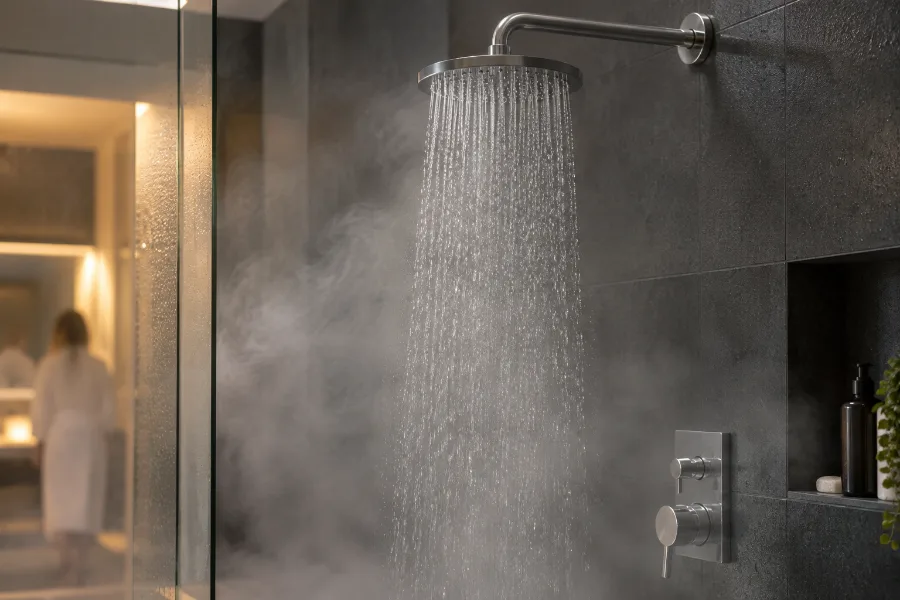
puts a large, short load on a small exchanger and demands a tight approach - what the E-series was developed for.
Request a QuoteWhich question you are answering decides the frame, and the two answers are far apart.
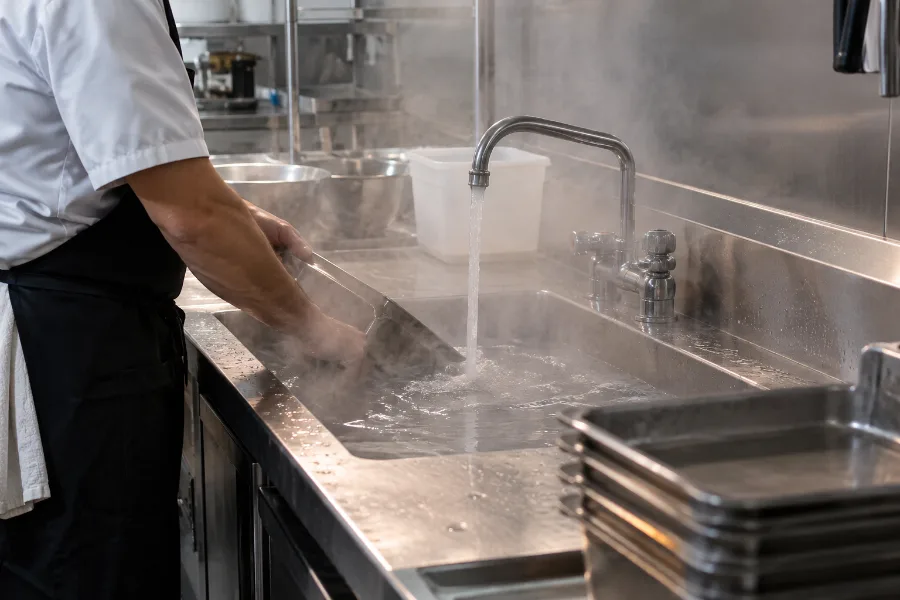
Sizing for the draw or sizing for the recovery
An instantaneous system has no storage to hide behind. It must meet the peak simultaneous draw in real time, which is a large duty for a short period, with a tight approach because the incoming cold water has to reach delivery temperature in one pass.
A storage system converts that peak into an average. The exchanger only has to replace what the tank gives out, over whatever recovery period the tank volume buys. That is a much smaller duty and a much more forgiving selection.
The mistake is sizing an instantaneous system on average demand. It works until two showers run at once.
- Hard water scales the hot surface - , and an instantaneous unit runs the hottest surface in the building. Plan for periodic acid cleaning.
Sizing This Duty
To size a domestic hot water exchanger we ask for peak potable flow, cold inlet temperature and delivery setpoint, plus the heating water flow and temperature. Say wether NSF/ANSI 61 applies. Frame, plate count and pressure class come back in the quote.
Request a domestic hot water quoteDetails That Decide It
The peak simultaneous draw, the delivery temperature, and the coldest incoming water temperature of the year. Winter mains water is the case that sets the duty, and a selection made on a summer inlet reading comes up short in the months people most want hot water.
On the heating side, give the primary supply temperature and the flow the boiler or heat source can actually deliver. Add the pressure drop you can spare on the potable side, since that comes out of the mains pressure reaching the fixtures.
Scale deposits fastest where the plate surface is hottest, and the surface temperature follows the primary water, not the delivery setpoint. Running the boiler loop much hotter than the duty needs is the usual cause. The symptoms are delivery temperature sagging at peak draw and a climbing pressure drop on the potable side.
The selection can help. More plates let a cooler primary do the same job, which lowers the surface temperature and slows the deposit. That is a real trade: a larger exchanger against fewer cleanings. Fit valved cleaning connections either way.
By the markings on the exchanger and its dimensions. Units such as the E6T are supplied to boiler makers in specific builds, so take the string from the label on the exchanger itself, and measure the port centres and the pack thickness as a cross-check.
For a commercial water heater, the nameplate designation is the specification - frame, plate count, material and connections. In either case, check whether the local code has changed since the original was installed. A single-wall unit that was acceptible then may now need to be double wall, and that changes the dimensions.
Often. The SC build - 316/316L plates with copper braze - is the general-duty choice. NC, with 304 plates, is a lower-cost option for ordinary water.
Two conditions move the choice. Chloride-bearing water pits 316, and the answer is MC with SMO 254 plates. Where copper in contact with the water is restricted by the specification or is a concern for the water itself, the All-Stainless SPS construction, as on the B16, removes copper entirely.
A water analysis settles it. Plate and Brazing Materials lists every code.
Frames for This Duty
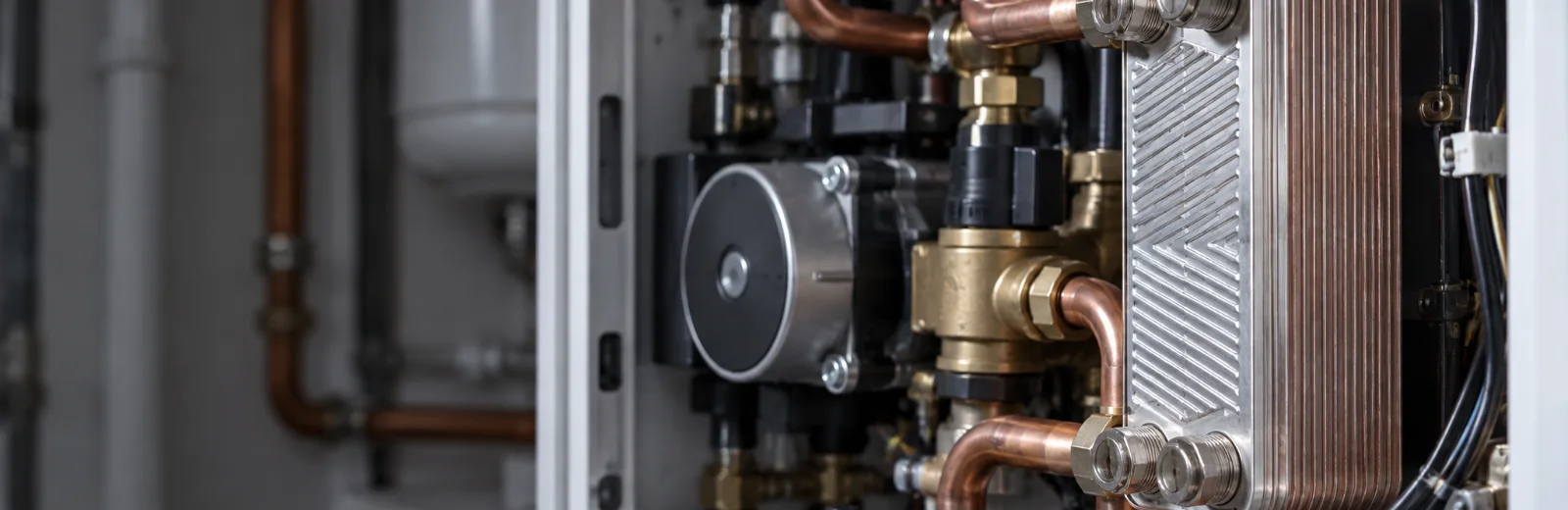
SERIES • UP TO 18 GPM
SWEP E6T
E-series geometry, developed for low-pressure boiler and wall-hung domestic hot water duty.
+ Learn More
SERIES • 18 TO 75 GPM
SWEP B16
All-Stainless construction - copper-free plates and brazing throughout.
+ Learn More