
1-805-484-2992
Quotes - Engineering - SalesBrazed Plate Heat Exchangers in Building Systems
Building duty is isolation duty. A boiler, a chiller, a district main or the ground itself on one side, and the building's own circuit on the other, with the exchanger as the boundary between them. The exchanger is rarely the interesting component - until its approach temperature starts costing compressor lift or boiler return temperature every hour the plant runs.
In commercial HVAC the brazed plate exchanger either sits between two loops - plant and distribution, glycol and water - or works inside the chiller as its evaporator or condenser. The HVAC and Chilled Water page takes each of those jobs in turn.
Refrigerant charge now shapes heat pump exchanger selection as much as capacity does, because the low-GWP refrigerants are mostly flammable and the exchanger holds part of the charge. The Heat Pumps page covers how internal volume enters the choice.
In district energy the substation exchanger is judged by how cold it sends the primary water back, which makes approach the governing figure. The District Energy page works through what that means for frame and plate count.
Data center liquid cooling uses the brazed plate exchanger as the separation between facility water and the loop serving the servers, on continuous duty. The Data Centers page sets out what that asks of the unit.
Send the flows, the temperatures on both sides and the fluid in each circuit. Building duty selections usually come back the same day, priced, with a stock position.
Call and talk it through with an engineer: 1-805-484-2992
Chillers, heat pumps, district energy and data centers - the four building-side markets where a brazed plate exchanger is usually the isolating component between two water systems.
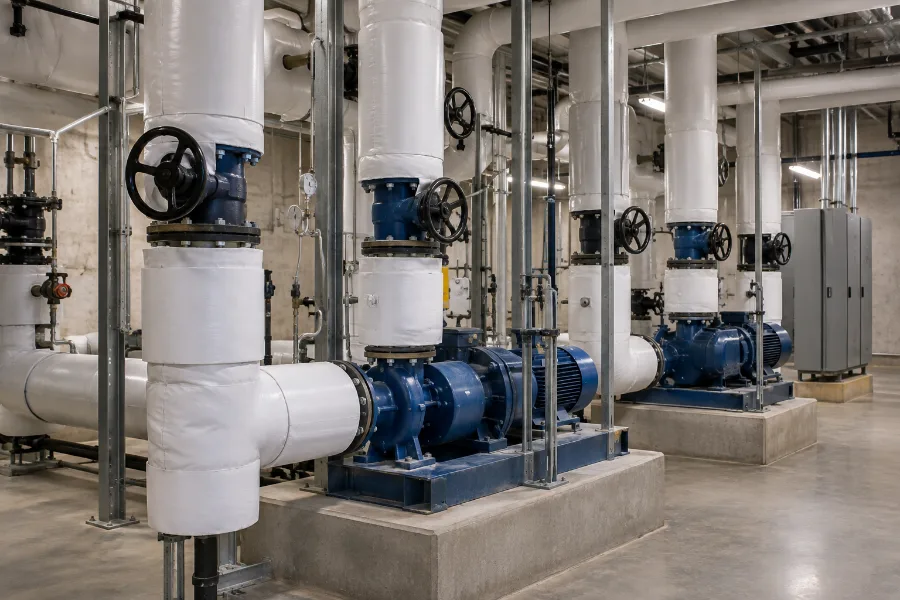
Building Systems Applications



Building System Applications
HVAC isolation, heat pumps, district energy and data centers - four duties with one shape: two circuits that must exchange heat without mixing, in a plant room nobody wants to revisit.
The Approach Temperature Is the Budget
On an isolation duty the exchanger sits between two loops trying to be the same temperature, and every degree it fails to close is paid for in compressor lift or boiler return. Deciding what approach the system actually needs - rather than inheriting a number - is most of the selection.
Applications in This Market
No Gaskets Is the Point
A brazed unit has no gasket schedule and no gasket failure mode, which is why it suits plant rooms where access is poor and maintenance budgets are thin.
The trade is that it cannot be opened. Where the water quality is bad, filtration and CIP provisions belong in the design from day one.
Stock Decides More Than It Should
The frames building duty calls for - B25T, B28, B120T - are the most heavily stocked in the range, so a failed unit is usually replaceable in days.
Send the nameplate string before redesigning anything: the odds are good the exact build is on a shelf.
Building Systems Applications
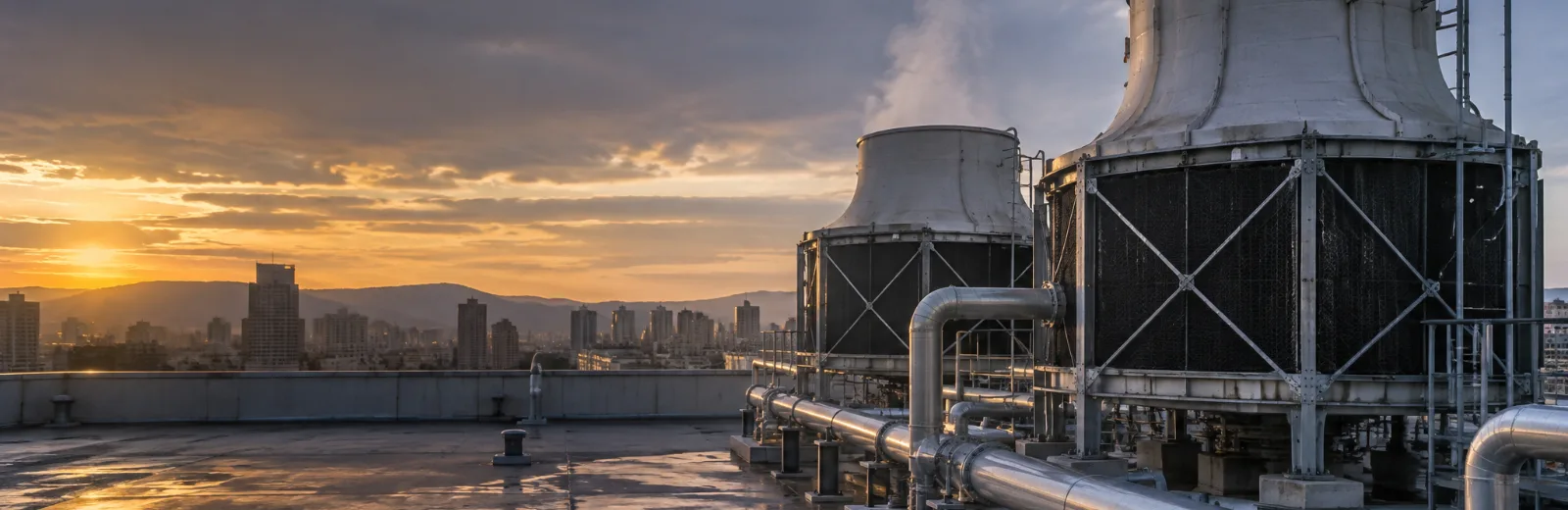
MARKET • BUILDING SYSTEMS
HVAC and Chilled Water
Most commercial HVAC duty a brazed plate exchanger sees is one of three jobs: isolating a boiler or chiller from the distribution loop, transferring between a glycol circuit and a water circuit, or acting as the evaporator or condenser inside the machine itself.
+ Learn More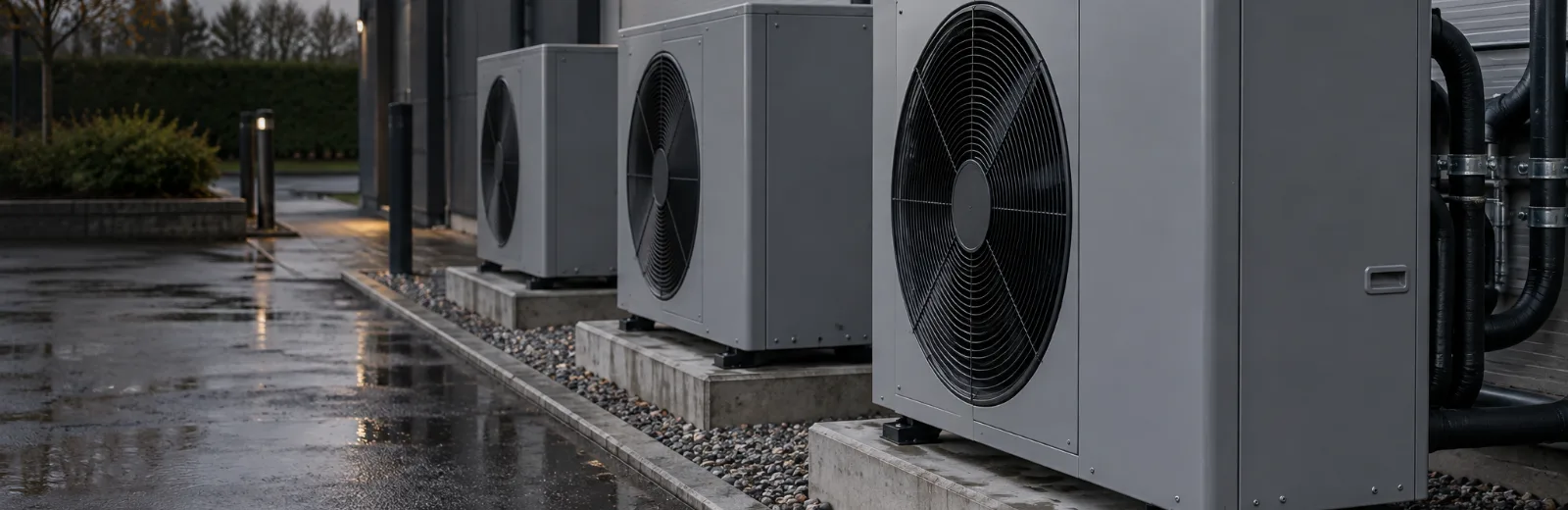
MARKET • BUILDING SYSTEMS
Heat Pumps
Heat pump design is being reshaped by refrigerant regulation, and the exchanger is one of the components carrying that change.
+ Learn More
MARKET • BUILDING SYSTEMS
District Energy
District heating substations are written around one number: the temperature the primary network gets back.
+ Learn More