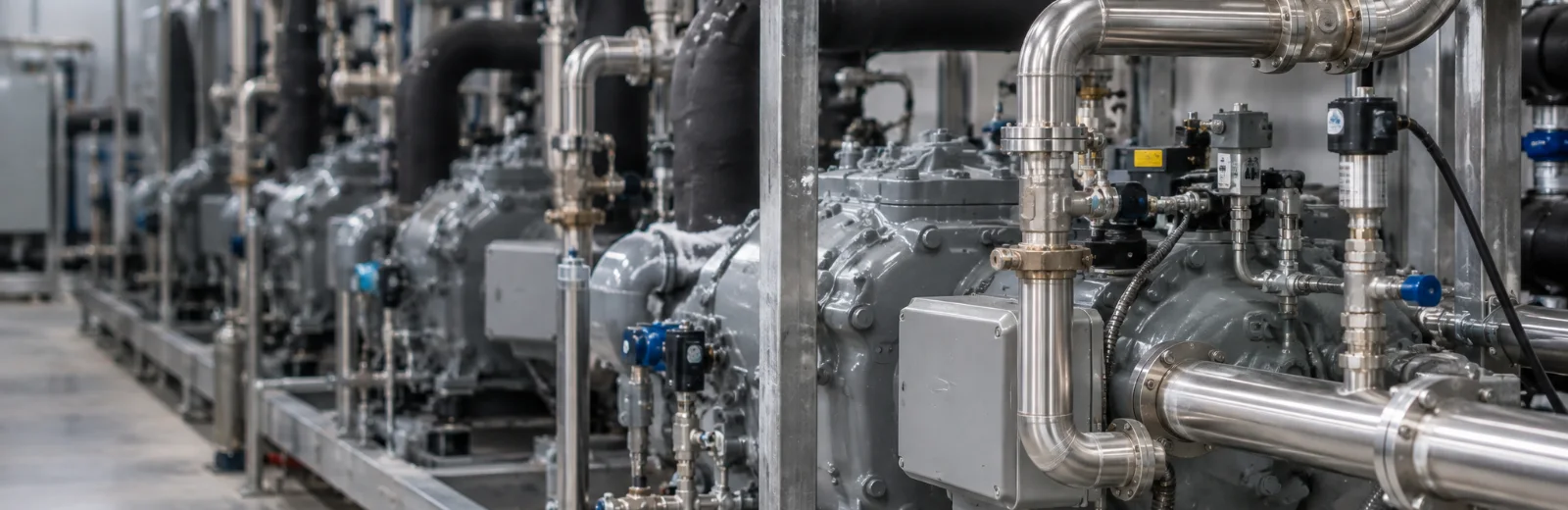
Supermarket CO2 Systems

Up to 140 Bar at 135 C

That packaging matters. The alternative at those pressures is normally a much heavier assembly, and in a supermarket plant room the space and the weight are both real constraints.

The three CO2 frames are B4T at the small end, B18 in the middle and B185 at the top - the last asymmetric as well as ultra-high-pressure, which is close to ideal for transcritical duty.

Up to 140 bar at 135 C. for transcritical gas coolers, evaporators, economizers and oil coolers.

Up to 60 bar at 100 C. , and up to 56 bar at 100 C for subcritical and cascade systems.

UL approval for CO2 requires a relief valve on each side. , opening at 0.9 times design pressure. Build it into the design, not the commissioning.
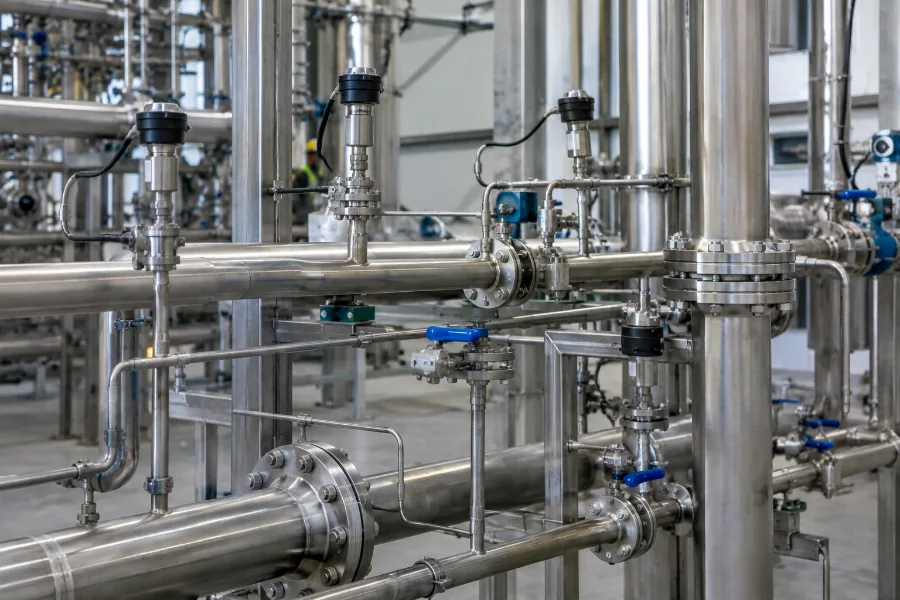

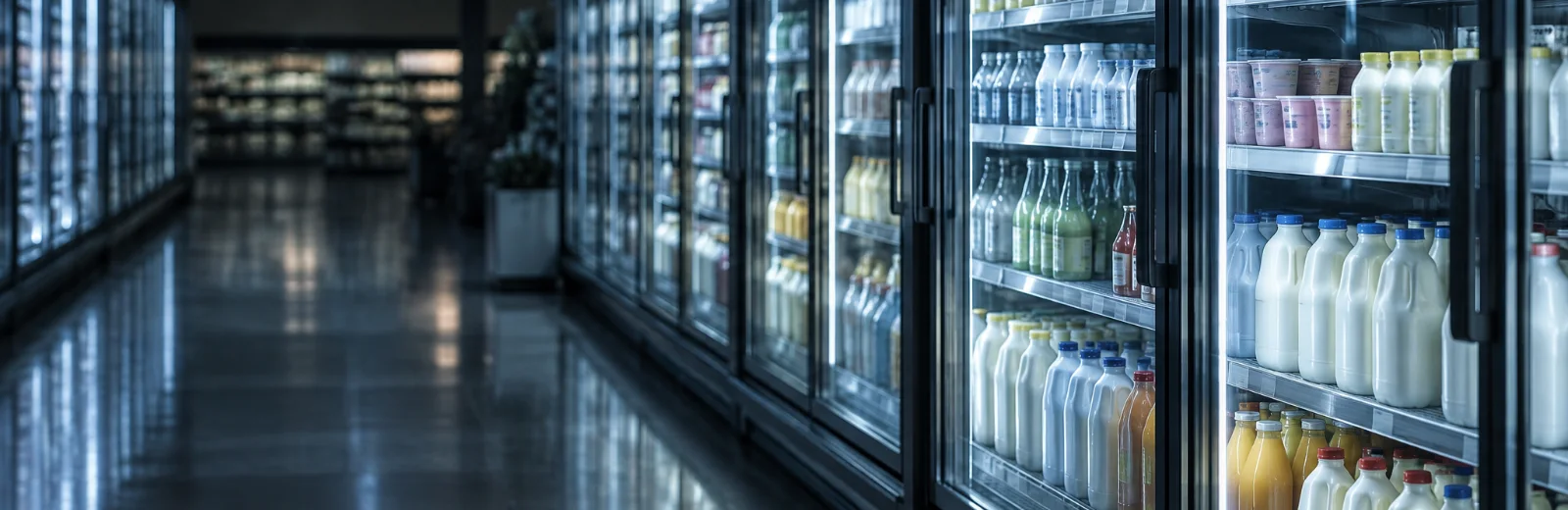
supermarket co2 systems with SWEP brazed plate heat exchangers
Transcritical CO2 Transcritical CO2
Gas Coolers Gas Coolers

Heat Reclaim Heat Reclaim

140 Bar Class 140 Bar Class

Supermarket CO2 Systems Selection

What decides the frame, and what to send with the enquiry.

Duty Inputs

  • Flows: both sides
  • Temperatures: in and out
  • Fluids: named, not described
  • Pressure drop: what is affordable

Typical Frames

Watch Items

  • Send the duty for a check
FRAME CLASS ROLE
B4T U Small economizer, oil cooling
B18 U Gas cooler, evaporator
B185 U Large gas cooler, asymmetric channels

Why asymmetric channels suit transcritical CO2

The B185 is the frame to understand here, because it combines two things that are usually traded against each other.

Transcritical CO2 wants tight refrigerant channels to hold the coefficient up - the fluid is dense and the heat transfer is good, but only if the velocity is there. The water or glycol side wants the opposite: a larger channel, so the pumping cost stays sane.

A symmetric plate cannot give both. An asymmetric pack can, and doing it inside a package rated past 64 bar is the part that is hard to find elsewhere.

The practical note for a supermarket job: gas cooler duty varies enormously with ambient, so the selection that looks right on a design day can be badly off in shoulder seasons. Give us the ambient range with the duty.


Frames for This Duty

SWEP B185 brazed plate heat exchanger - u pressure class with asymmetric channels - the large co2 frame
SWEP B18 brazed plate heat exchanger - u pressure class - 64 to 140 bar, built for transcritical co2

Before You Specify

Standstill. A subcritical or cascade exchanger selected on its running pressure, in the tiers up to 56 or 60 bar at 100 C, is correct while the plant operates. When power fails and the store warms, the CO2 in that section warms with it and the pressure rises far past the running figure.

Either the section is protected by relief and a standstill strategy that keeps it inside the tier, or the exchanger has to be rated for what it will actually see. Decide which at design, and state it with the enquiry.

Above the critical point the CO2 does not condense at a fixed temperature; it cools continuously along the whole plate. So the figure that matters is how close the leaving gas gets to the entering water or glycol, and counter-current piping is essential to reach it.

For heat reclaim, the hottest part of the gas is the valuable part. Staging two exchangers in series - the first on hot water, the second on lower-grade heating or rejection - recovers more useful heat than one large pack. Send the ambient range and the reclaim temperatures you want.

No. U class spans 64 to 140 bar, so two units of the same frame can carry different stamped ratings. Read the design pressure and temperature off the nameplate along with the full designation, including plate count and connections.

The rating feeds straight into the safety devices. Under UL approval, each side has a relief valve set at 0.9 times design pressure, so a replacement with a different design pressure means revisiting the valves. Keeping the same rating keeps them unchanged. The SWEP B185 page lists the configurations.

It needs checking against the rating, not just the braze. The top CO2 tier is up to 140 bar at 135 C, and transcritical discharge gas can run hot when ambient is high and the compression ratio rises. The 135 C figure is reached well before the copper braze ceiling of roughly 185 C, so it is the binding one.

Give us the highest discharge temperature the rack reaches in summer operation, not the design-point value. See Pressure Classes for how pressure and temperature pair up.

Quote Request Form:

Questions?

1-805-484-2992

Quotes - Engineering - Sales