
1-805-484-2992
Quotes - Engineering - SalesREFRIGERANT DUTY
Desuperheaters
Discharge gas leaves the compressor far hotter than the condensing temperature. That superheat has to be removed anyway, and it is normally thrown away to ambient.
Capturing it into a domestic hot water or process loop recovers usable heat at a temperature the condenser itself could never deliver, and slightly reduces condenser load at the same time.
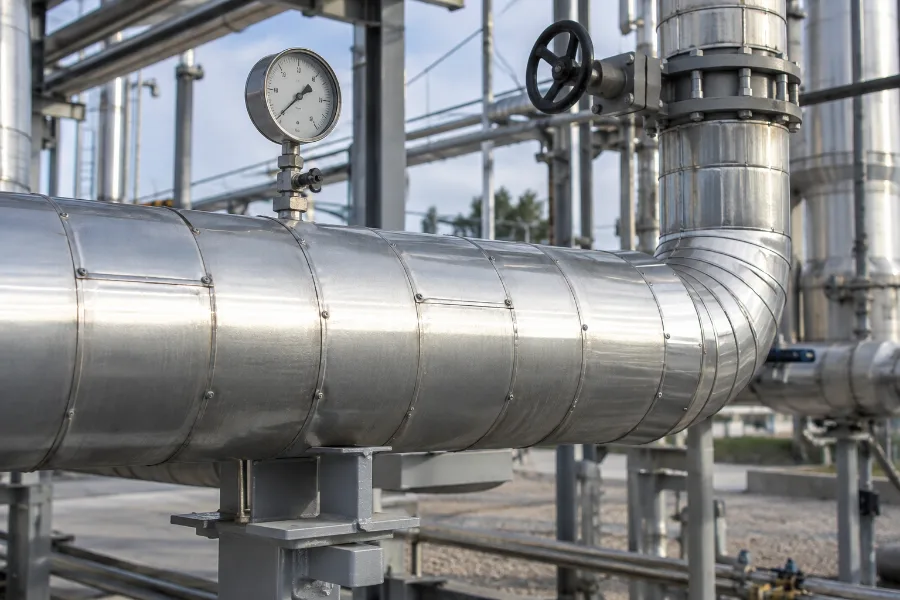
Copper is good to roughly 185 C, and discharge temperatures on high compression ratio systems can approach it.
Request a QuoteDesuperheating is one of the few genuinely free wins in a refrigeration plant, and it is under-used because of two constraints that are easy to design around and awkward to retrofit.
Free heat, with two conditions attached
The first is temperature. The heat is high grade precisely because the gas is hot, and hot gas is what tests a copper braze. It is not a pressure problem - the pressures are ordinary - it is a material ceiling, and it needs checking against the compressor's actual discharge rather than its nominal condensing temperature.
The second is what the heat is going into. If the answer is domestic hot water, the exchanger is now a potable separation device and inherits every rule that goes with that, including double-wall construction in several jurisdictions.
Design for both at the start and the duty is nearly free. Discover either at commissioning and it is a replacement.
- If the heat goes to potable water - , the potable rules apply and a double-wall frame may be mandatory.
Sizing This Duty
What we need for a desuperheater: the refrigerant, the compressor discharge temperture and refrigerant flow, and on the water side the flow with entering and target leaving temperatures. The quote identifies the frame, plate count and pressure class.
Request a desuperheaters quoteBefore You Specify
It starts condensing. With cold water or too much water flow, the gas is cooled past its saturation point inside the desuperheater and liquid forms in a pack and pipe run that were laid out for vapor only.
The symptoms are unstable head pressure and liquid arriving at the condenser inlet in slugs. Pipe the gas in at the top so any liquid that does form drains forward to the condenser, and control the water side - by flow or by a temperature limit - so the leaving gas keeps some superheat at low load.
For low water flow and a large temperature rise, piped counter-current so the leaving water meets the hottest gas. That gives high water temperature from a modest share of the total heat rejection, which is all the superheat amounts to.
Two limits apply. Slow-moving hard water at high temperature deposits scale, and a brazed unit cannot be opened to remove it. And where the unit carries a potable approval, NSF/ANSI 61 is limited to 90 C. Give us the water quality along with the target temperature.
Look at pulsation and thermal cycling before reordering. The discharge line carries compressor gas pulsation straight into the pack, and pulsation fatigues braze joints. A desuperheater also sees the widest temperature swings in the circuit each time the machine starts against cold water.
Support the discharge piping so the connections carry no load, isolate vibration between compressor and exchanger, and avoid feeding cold water in a sudden step into a hot pack. Then replace against the full nameplate designation; a double-wall unit must be replaced with a double-wall unit. The Double-Wall Separation page explains why.
No. The pressure class has a temperature of its own, and it is lower than the braze figure. M class, the usual refrigerant class, is up to 45 bar at 135 C, and S class is 31 bar at 155 C. A discharge temperature that a copper braze tolerates can still sit above what the class is rated for.
Those are categories, and the stamped rating on the individual unit governs. Where the gas is hotter than a copper-brazed build allows, the nickel-brazed SN construction reaches around 350 C. Send the measured discharge temperature at the worst operating condition.
Frames for This Duty
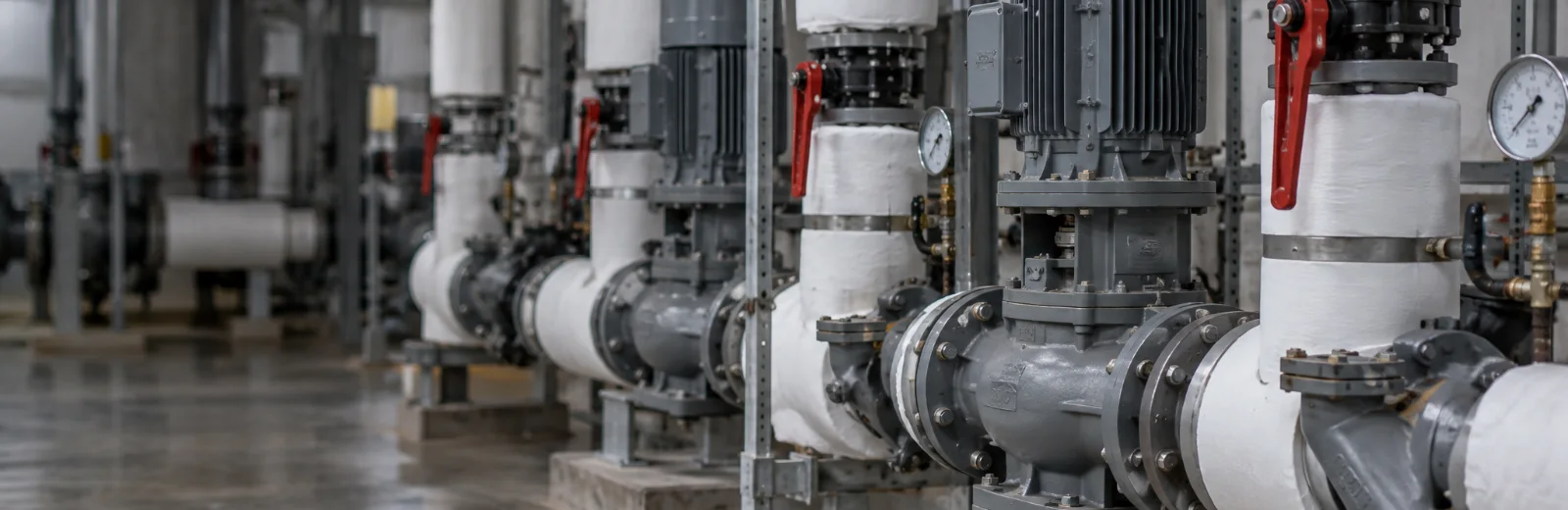

SERIES • 18 TO 75 GPM
SWEP B85
160 plates on the 526 mm frame, with tighter channels than the B80.
+ Learn More
RELATED
Condensers
A condenser does three jobs in one pack: it desuperheats the discharge gas, condenses it, and subcools the liquid. Each happens in a different part.
+ Learn More